

The First mRNA Cancer Therapy to Win a Phase 3 — And the Still Open Questions
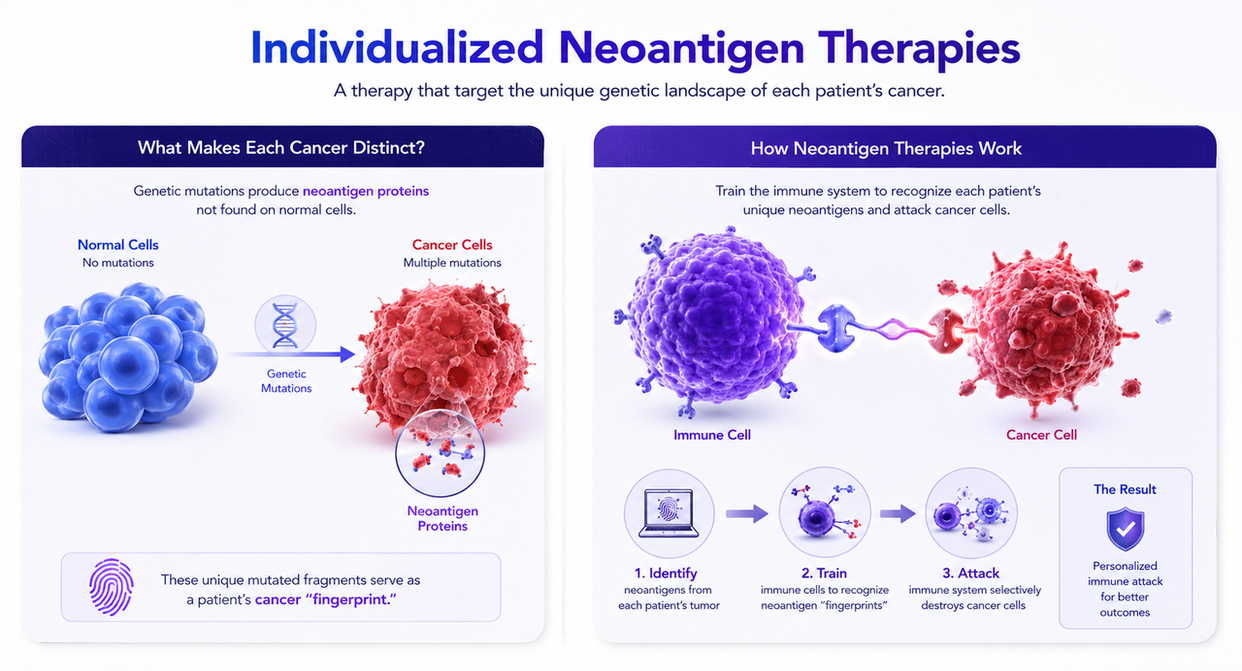
Individualized Neoantigen Therapy — A FIELD ANALYSIS: PART I, The First mRNA Cancer Therapy to Win a Phase 3 — And the Still Open Questions
Individualized neoantigen therapy (INT) synthesizes a bespoke medicine for each patient from the somatic mutational profile of that patient's own tumor. The concept has been biologically plausible for over a decade, but therapeutic cancer vaccination has an unusually poor record in randomized testing, and no INT had won a Phase 3 trial — until now. On August 19, Merck and Moderna announced that the Phase 3 INTerpath-001 trial (NCT05933577; n = 1,137; completely resected stage IIB–IV cutaneous melanoma; 2:1 randomization; double-blind, placebo- and active-comparator-controlled) met its primary endpoint of recurrence-free survival (RFS) and its key secondary endpoint of distant metastasis-free survival (DMFS) at a prespecified interim analysis, with no new safety signals. [1,2,3] Three claims move from hypothesis to randomized evidence: that computationally selected, patient-specific neoantigens encoded in mRNA can alter the natural history of cancer; that mRNA is a therapeutic and not only a prophylactic modality; and that a distinct medicine manufactured for each individual can be produced, released and delivered inside a 1,137-patient multinational trial — an industrial demonstration as much as a scientific one. What is not established: the Phase 3 hazard ratios, p values, confidence intervals, Kaplan–Meier curves and absolute event rates are undisclosed; overall survival is immature; the manufacturing feasibility rate is unreported; and performance in tumors with lower mutational burden, weaker antigen presentation or less checkpoint sensitivity cannot be inferred from melanoma.
1. Why the Field Failed, and What Changed
Therapeutic cancer vaccination has one of the least encouraging track records in oncology. From the 1990s onward, dozens of candidates directed at shared tumor-associated antigens — MAGE-A3, gp100, MUC1, telomerase, survivin — reached randomized testing, and nearly all failed. The reasons were structural, not accidental. Such antigens are, with rare exceptions, self-antigens: the T-cell repertoire able to recognize them has been pruned by tolerance, leaving a low-avidity remnant. Where immunization did raise responses, they arrived in a microenvironment in which PD-1, LAG-3, adenosine, TGF-β and regulatory T cells extinguished them. And the trials enrolled patients with bulky, advanced, heavily pretreated disease, the setting least hospitable to a mechanism that needs weeks to mature. [4]
Three developments dissolved these constraints more or less simultaneously. Affordable next-generation sequencing made it possible to enumerate, for one patient, the somatic mutations that generate neoantigens — peptide sequences absent from the germline proteome and therefore never subject to thymic tolerance. Immune checkpoint blockade supplied a pharmacological means of preventing the extinction of a newly primed response. And the mRNA–lipid nanoparticle (LNP) platform supplied a manufacturing chassis in which the drug substance is a digital sequence file rather than a fixed molecular entity, the only realistic way to make a different medicine for every patient at scale. [4,5] Intismeran autogene (mRNA-4157; V940), developed jointly by Moderna and Merck, is the most clinically advanced product of that convergence, and INTerpath-001 is the first randomized Phase 3 test of the idea. [1]
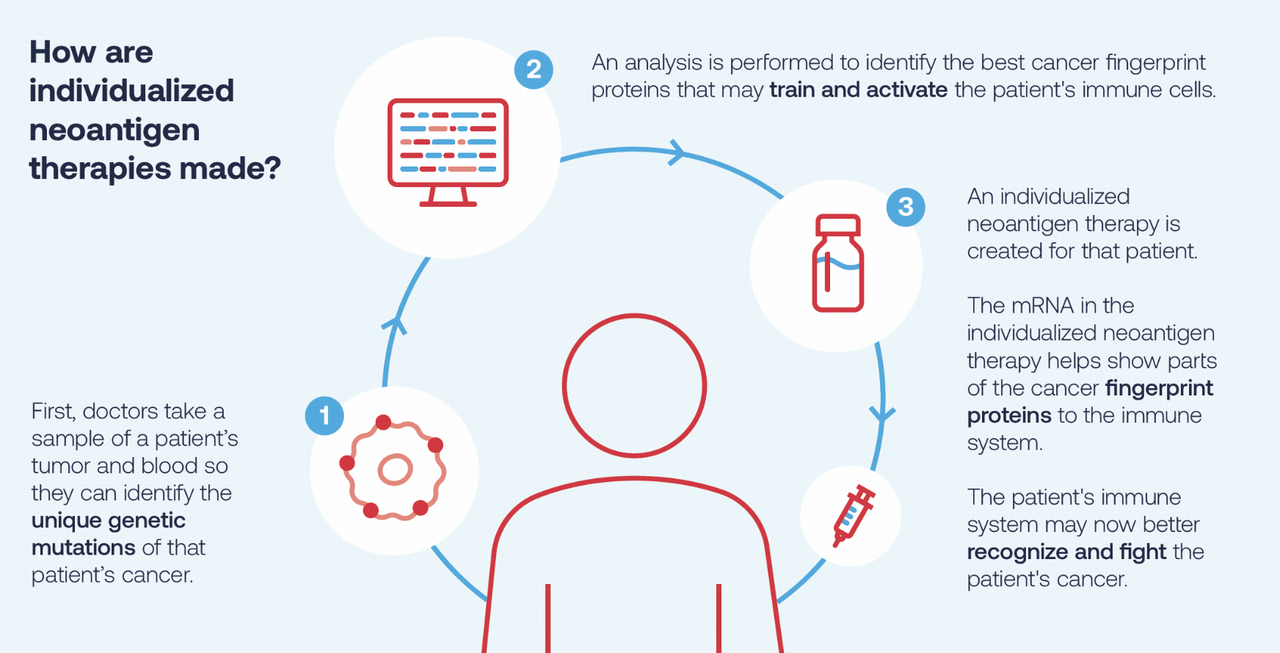
Source: Moderna, modernatx.com/media-center/all-media/blogs/individual.neoantigen-therapies
2. The Modality: Why It Should Work
Why a neoantigen is a better target than a tumor-associated antigen
A neoantigen is a peptide encoded by a somatically altered sequence — most often a non-synonymous single-nucleotide variant, but also indels producing frameshifts, gene fusions, splice variants and aberrant post-translational products — that is processed by the proteasome, transported into the endoplasmic reticulum, loaded onto an MHC molecule and displayed at the cell surface. Its defining property is negative: the sequence does not exist in the germline proteome, so it was never presented during thymic negative selection, and the T-cell clones able to recognize it were never deleted. [4]
Two consequences follow. The available repertoire is high-avidity, resembling that against a viral epitope rather than the depleted repertoire against a self-antigen. And because the target exists only in malignant cells, on-target off-tumor toxicity (the dominant safety liability of cell therapies and T-cell engagers directed at lineage antigens) is mechanistically minimal.
The corresponding cost is that neoantigens are overwhelmingly private: analyses of tumor-infiltrating lymphocyte (TIL) reactivity across gastrointestinal cancers show that the great majority of determinants recognized by a patient's own T cells are unique to that patient. [4,6] There is no off-the-shelf product to be built from private neoantigens; the therapy must be constructed per patient. That constraint, not the immunology, is what delayed the field.
Why mRNA is the right chassis for individualization
mRNA suits individualization because the information content of the drug is separable from its physical chemistry. The lipid nanoparticle, the buffer, the fill–finish process and the analytical release panel are identical for every patient; only the transcribed sequence differs. A bespoke biologic, which for a peptide or dendritic-cell product would require patient-specific synthesis chemistry or cell culture, becomes, in effect, a manufacturing information problem. [5]
The immunological advantages are not incidental either. After intramuscular injection, LNPs are taken up by myocytes and by antigen-presenting cells in muscle and draining lymph nodes; endogenous synthesis then routes the antigen directly into the MHC class I pathway via the proteasome and TAP — the route required to prime CD8+ cytotoxic T lymphocytes, which exogenous peptide antigens reach only inefficiently through cross-presentation — while dendritic cells transfected in situ present fragments on class II, recruiting the CD4+ help needed for durable memory. Moderna's construct substitutes N1-methylpseudouridine for uridine, suppressing innate RNA sensing and raising translational output while retaining enough residual stimulation for adjuvant activity. In practice this yields reactogenicity dominated by transient low-grade fatigue, injection-site pain, chills and pyrexia, shown by the KEYNOTE-942 safety data. [5,7]
Why the partner must be a checkpoint inhibitor
Pairing a neoantigen therapy with pembrolizumab is not empirical convenience: the two agents act on non-overlapping steps of the cancer–immunity cycle. The vaccine addresses priming and expansion, supplying antigen at high density in a lymphoid context. Anti-PD-1 addresses the effector phase, preventing exhaustion of those clones once they engage antigen in peripheral tissue, where PD-L1 is induced by the interferon-γ released by the very T cells the vaccine generates. Compactly: the vaccine adds targets; the antibody releases the brake.
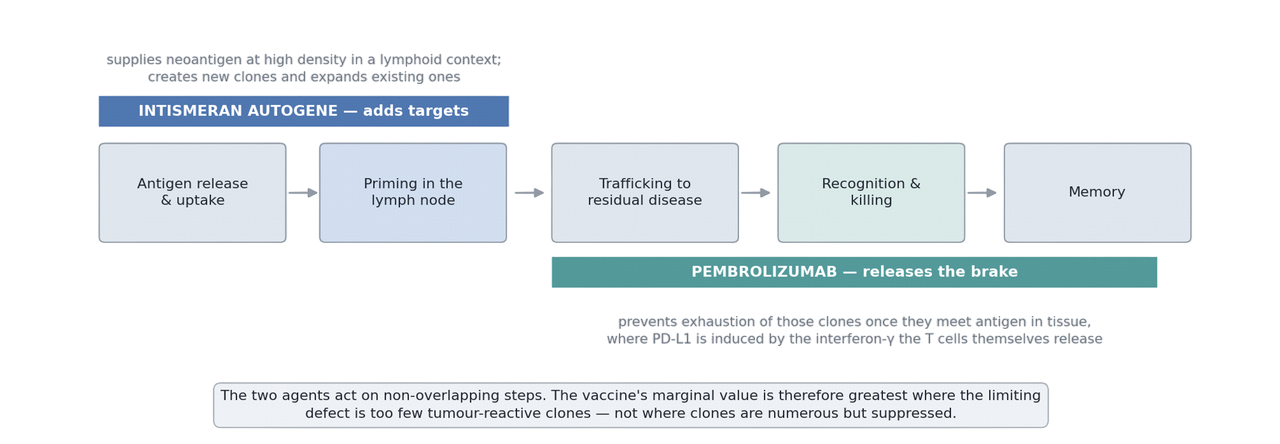
This produces a testable prediction. The incremental benefit of adding a vaccine should be greatest where the limiting defect is an insufficient number of tumor-reactive clones, not where clones are numerous but suppressed. An exploratory observation in KEYNOTE-942 that benefit was not confined to patients with high tumor mutational burden (TMB) or PD-L1 positivity is consistent with this model [8], though it is hypothesis-generating rather than definitive.
A tension worth stating explicitly, because the source draft did not. This argument that low-TMB tumors have the most to gain sit uneasily beside the claim in §5 that low-TMB tumors may fail for want of enough credible epitopes to build a construct from. Both can hold, and reconciliation is an inverted U: below some threshold the candidate pool is too small and the design premise fails outright; above it, the marginal value of adding clones is greatest where spontaneous priming is weakest. The operative variable is not TMB alone, but the joint distribution of neoantigen supply and spontaneous priming. And no trial has yet been designed to separate them.
A second implication concerns tumor burden. A vaccine-primed response takes weeks to mature and yields a finite number of effector cells: against measurable metastatic disease that output is overwhelmed, against micrometastatic residual disease it may suffice. The modality is therefore intrinsically an adjuvant therapy, and the trial design follows from the biology rather than from commercial preference.
3. The Molecule and the Pipeline
The construct
Intismeran autogene is a single synthetic mRNA encoding up to 34 patient-specific neoantigens as a concatemer, a continuous open reading frame in which neoepitope-containing segments are joined end to end, each presented with short native flanking sequence so that the natural proteasomal cleavage context is preserved. [1,9] The construct carries the standard platform elements: a Cap-1 5′ cap, optimized 5′ and 3′ untranslated regions, a codon-optimized coding region with N1-methylpseudouridine substitution, and a polyadenylated 3′ terminus. The single-transcript design is deliberate: it fixes the number of drug substances at one regardless of epitope count, which is what makes analytical release testing tractable for a product that differs in every batch.
The encoded polypeptide has no biological function and is not intended to fold: it is a substrate for degradation, translated and immediately routed to the proteasome to release its epitopes into the class I pathway. Some contemporary designs add shared tumor-associated antigens alongside private neoantigens, broadening coverage where the private yield is low. [4,10] The drug product is mRNA encapsulated in an LNP of ionizable cationic lipid, phospholipid, cholesterol and PEG-lipid, given intramuscularly. [5]
The design pipeline, step by step
Because the product does not exist until the patient does, the pipeline is part of the drug: seven steps separate the operating theatre from the first injection.
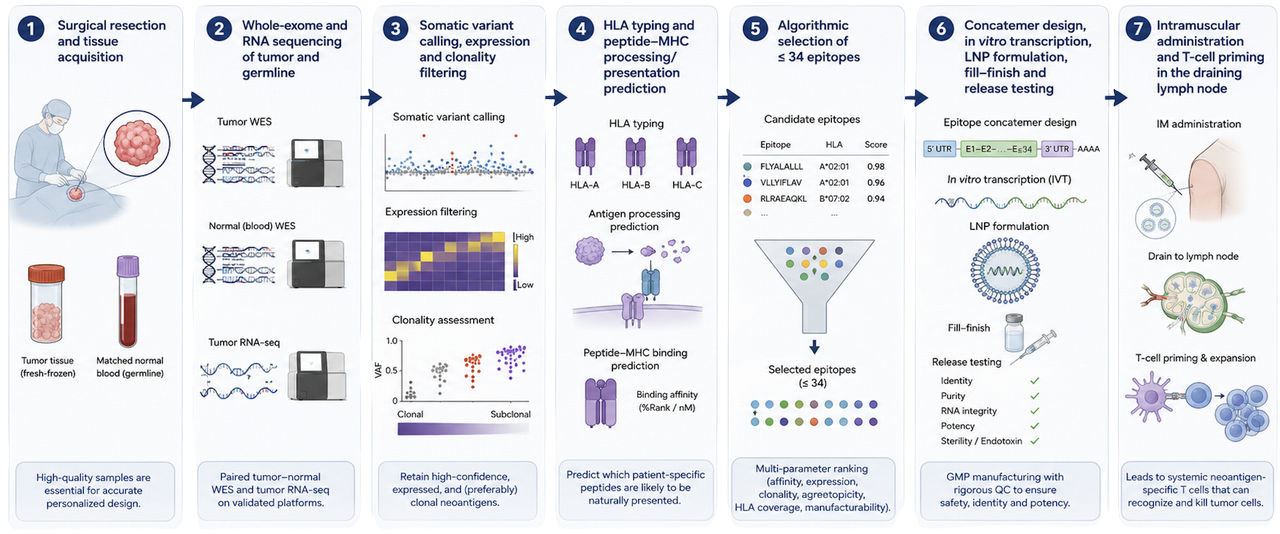
How good is the epitope-selection algorithm?
Step 5 is where the pharmacology of the product is decided, and its credibility is not merely assumed. In a published benchmarking exercise, the mRNA-4157 selection algorithm was applied retrospectively to exome and transcriptome data from patients with microsatellite-stable metastatic colorectal cancer for whom neoantigen-reactive TIL populations had been independently identified by high-throughput screening at the National Cancer Institute. Its designs captured a substantial minority of the experimentally validated TIL-recognized neoantigens, and for most patients included at least one epitope with demonstrated CD8+ or CD4+ reactivity. [6]
This is meaningful but sobering: the algorithm enriches genuinely immunogenic targets, and prediction remains imperfect, so a proportion of encoded epitopes will be inert. The 34-epitope capacity is partly a hedge against exactly this: breadth compensating for per-epitope prediction error. It follows that in this modality algorithmic improvement is pharmacological improvement: a construct in which 20 of 34 epitopes are immunogenic is a materially different drug from one in which 5 are.
Manufacturing is part of the therapy, not a supply detail
For a conventional biologic, manufacturing is a supply consideration. For individualized therapy, it is part of the intervention and part of the risk profile. Every patient's product requires its own in vitro transcription run, purification, LNP formulation, fill–finish and full release panel (identity, integrity, encapsulation efficiency, residual double-stranded RNA, endotoxin, particle size, polydispersity) on a batch that will be given to exactly one person and cannot be remade from inventory. Three consequences follow:
1. Turnaround time is clinically consequential. The interval between resection and first dose is a window in which micrometastatic disease is unopposed; the trials manage this by starting pembrolizumab first and adding intismeran once the product is available. [8]
2. Feasibility is a real endpoint. Patients whose specimen yields too little tumor, whose sequencing fails QC, or whose disease recurs during manufacture never receive the product. Neither the proportion in whom manufacture succeeded nor the median time to first dose has been reported for INTerpath-001.
3. Cost of goods and throughput determine whether a positive trial becomes an accessible therapy — a consideration with no analogue in conventional biologics.
Dose and schedule
Across the randomized program, intismeran has been given at 1 mg intramuscularly every three weeks to a maximum of nine doses. [1,8] The schedule is deliberately front-loaded and finite, a compressed priming and boosting course delivered during the period of highest recurrence hazard, not indefinite maintenance. In INTerpath-001 the partner was pembrolizumab 400 mg every six weeks for up to nine cycles, giving about one year of combined therapy; in KEYNOTE-942 it was 200 mg every three weeks for up to 18 cycles, the same cumulative exposure on a different interval. [1,3,8]
4. The Clinical Evidence
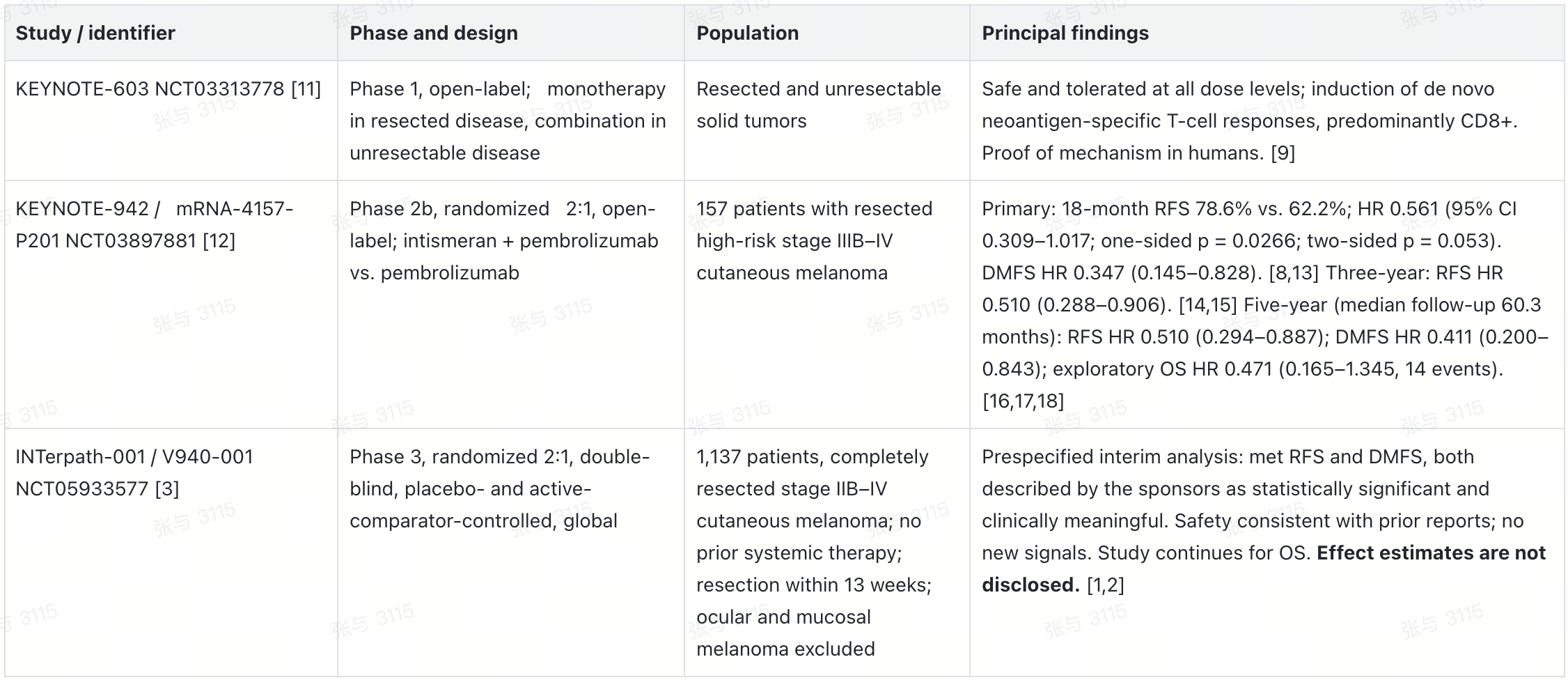
Phase 1 (KEYNOTE-603): the mechanism operates in humans
The first-in-human program answered two questions the field could not answer in advance: could an intramuscular LNP-mRNA encoding a long concatemer of computationally selected epitopes generate detectable antigen-specific T-cell responses in patients, and would a therapy encoding up to 34 targets be tolerable? Both were answered affirmatively. [9,11] Critically, the responses were largely new rather than expansions of pre-existing clones — the claim that distinguishes vaccination from checkpoint blockade, which can only amplify what already exists. [9]
Phase 2b (KEYNOTE-942): the randomized signal, and a correction
KEYNOTE-942 randomized 157 patients with resected high-risk stage IIIB–IV cutaneous melanoma 2:1 to intismeran plus pembrolizumab or pembrolizumab alone. The primary analysis reported 18-month RFS of 78.6% versus 62.2% — a 44% reduction in the risk of recurrence or death. [8]
The trial's most important property was not its primary analysis but its follow-up. Cancer-vaccine history is littered with early separations that converged; here the curves did the opposite. At a median 60.3 months (range 50.5–76.4; cutoff 15 December 2025), RFS events occurred in 26.2% of combination patients versus 46.0% (HR 0.510, 95% CI 0.294–0.887) and DMFS events in 14.0% versus 30.0% (HR 0.411, 95% CI 0.200–0.843), with a 4-year DMFS rate of 83.9% versus 65.4%. [16,17,18] An effect that is stable or strengthening five years after a nine-dose course that ended within the first year is the signature of durable immunological memory rather than transient cytoreduction,m precisely the claim the modality makes for itself.
Three caveats remain essential. The study was open-label and small: an HR of 0.51 from 157 patients carries substantial uncertainty, and investigator-assessed RFS in an open-label design is vulnerable to ascertainment bias. Exploratory subgroups suggesting benefits independent of TMB and PD-L1 status were not powered to support that conclusion. And the overall survival signal, HR 0.471 (0.165–1.345) on 14 events, is directionally encouraging and statistically uninformative; the 5-year OS rates of 92.2% versus 71.3% should not be reported as an OS benefit. [16,17]
Phase 3 (INTerpath-001): design and topline
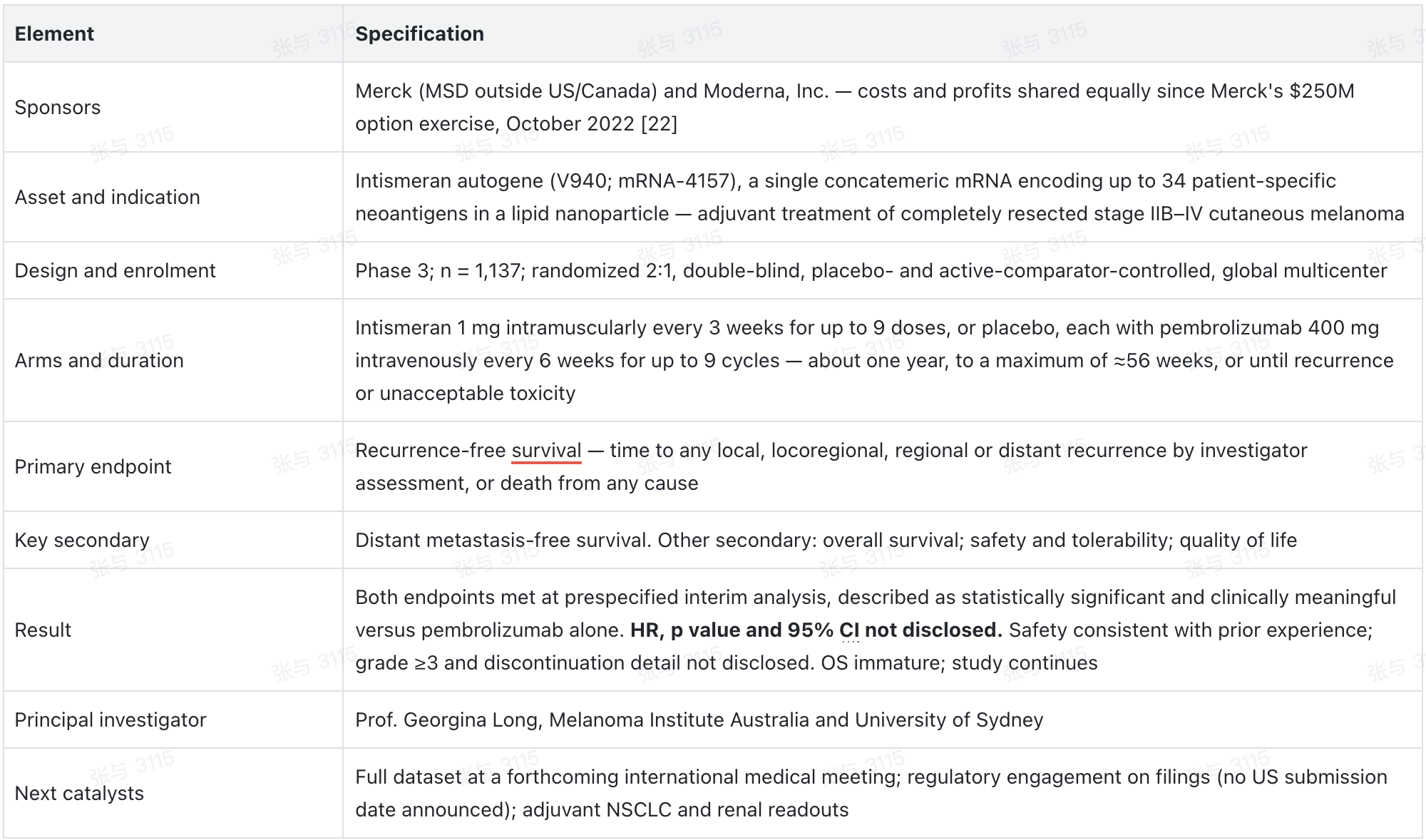
Sources: refs [1,2,3].
Three design features deserve comment. The comparator is active and current: adjuvant pembrolizumab is licensed standard of care for resected stage IIB, IIC and III melanoma, so this is a superiority trial against the best available therapy. [23,24] One nuance matters: the US label does not extend to resected stage IV, which INTerpath-001 enrolled, so for that stratum the control arm rests on class evidence and practice (adjuvant nivolumab is the agent licensed there) rather than on the pembrolizumab label. [24] This will matter when stage-specific subgroups are released. The trial is double-blind and placebo-controlled on the vaccine axis, removing the principal methodological criticism of KEYNOTE-942. And the population is broader, extending down to stage IIB and IIC, where baseline recurrence risk is lower and incremental benefit is correspondingly harder to demonstrate, so a Phase 3 hazard ratio numerically less impressive than 0.51 would be unsurprising and would not by itself indicate a weaker drug.
That RFS and DMFS moved together is the most informative feature of the topline. [1,2,25] RFS counts any recurrence, including local and locoregional events that are often surgically salvageable; DMFS counts the events that drive mortality. A regimen that delayed local recurrence without affecting distant spread would be of limited value. Concordance across both endpoints indicates the effect operates on the disseminated micrometastatic compartment that the mechanism claims to address.
The interpretive boundary
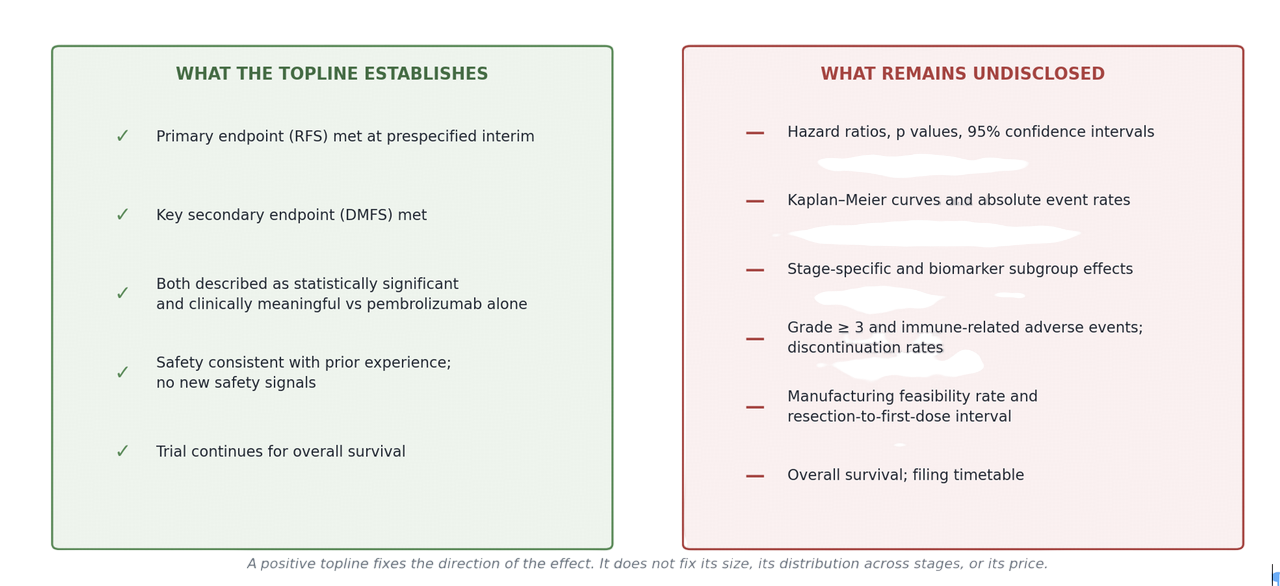
Figures circulating in commentary — “49% reduction in recurrence or death,” “59% reduction in distant metastasis” — are the five-year KEYNOTE-942 Phase 2b results (n = 157), not INTerpath-001 results. Applying them to the Phase 3 population is a category error; the sponsors' own release is explicit that the Phase 3 builds on, rather than reports, those numbers. [1,16,17]
For calibration, analysts publishing before the readout described an RFS hazard ratio of ≤ 0.72 as positive and ≤ 0.65 as a clear win, expecting compression given the larger, lower-risk, blinded population [26]; afterwards, at least one framed 0.60–0.70 at the data presentation as the threshold for a more positive view. [27] These are expectations, not data. Detailed safety, including grade ≥ 3 events, immune-related adverse events, discontinuation rates, has not been broken out. Overall survival is immature and remains the endpoint on which regulatory and clinical value ultimately turn. [1]
5. The Competitive Landscape
Intismeran autogene is the first individualized neoantigen therapy to succeed in Phase 3, but not the only one in development.
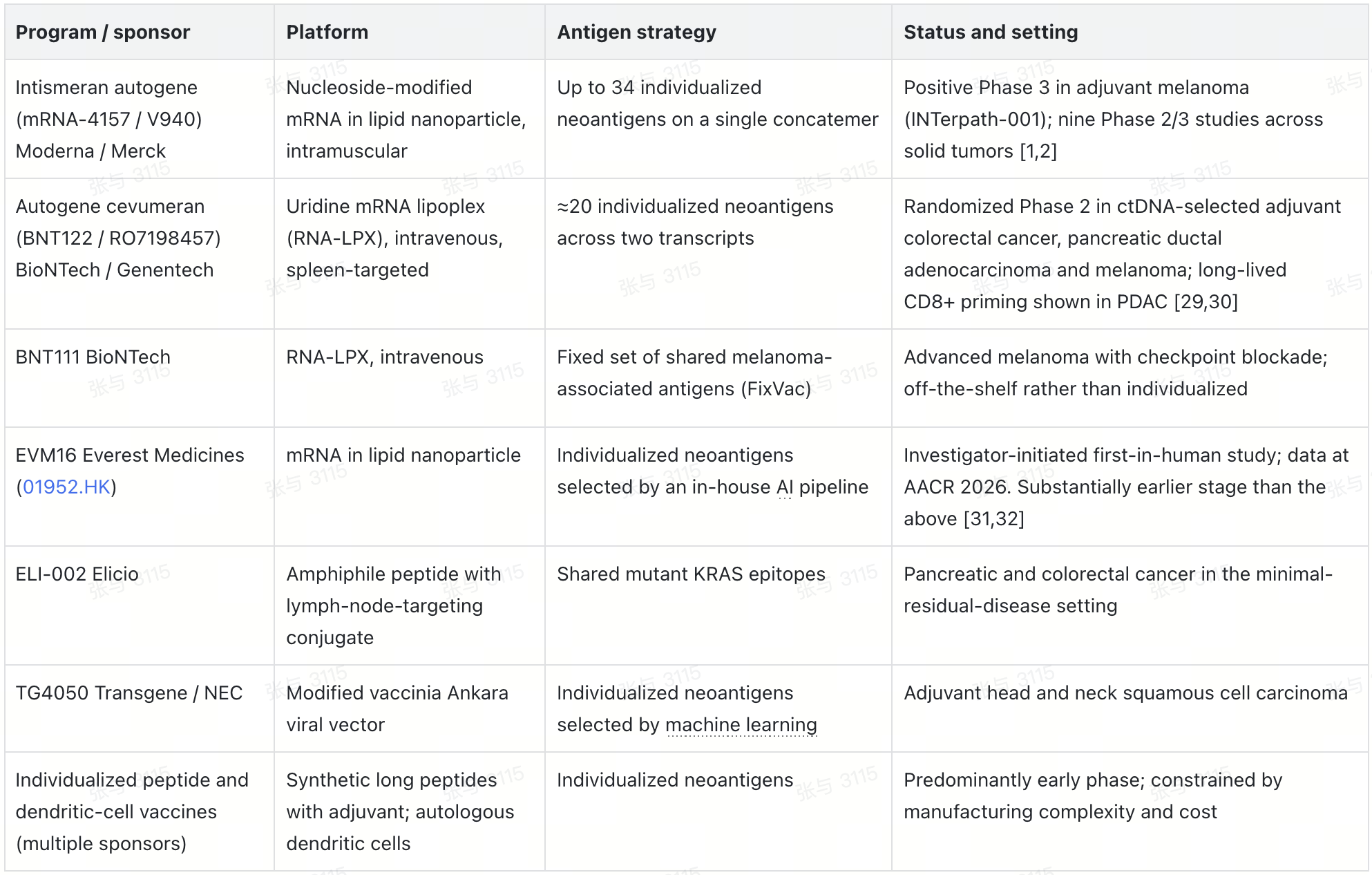
Sources: refs [1,4,10,29,30,31,32]. Programs are at very different stages; this is a map of the field, not a ranking. No head-to-head randomized comparison exists between any two of them, and none of the comparisons implied by adjacency is formally interpretable.
The principal technical divergence concerns delivery route: Moderna's intramuscular LNP relies on uptake by muscle-resident and lymph-node antigen-presenting cells, while BioNTech's intravenous RNA-lipoplex targets splenic dendritic cells, exploiting the spleen as a dedicated priming organ. [29,30] Both have produced convincing human T-cell responses; INTerpath-001 establishes that the intramuscular route suffices for a clinically meaningful outcome, which is a data point rather than evidence of superiority between routes. More broadly, the result reads across the class. Individualized neoantigen therapy has until now been valued at a discount reflecting the possibility that the whole mechanistic premise was wrong.
Moderna and Merck began collaborating on individualized cancer vaccination in 2016, four years before SARS-CoV-2; in October 2022 Merck exercised its option for $250 million, and the two now share development costs and eventual profits equally. [22] The oncology program is thus older than the vaccine business that made Moderna famous — the pandemic supplied scale, regulatory familiarity and capital, but not the idea. For Merck, intismeran adds an individualized layer to the pembrolizumab franchise as it approaches loss of exclusivity; for Moderna it is the first evidence that the platform generates registrational value outside infectious disease.
The melanoma result did not arrive in isolation. On August 5, 2026, the FDA approved mFLUSIVA (mRNA-1010), the first mRNA influenza vaccine licensed in the United States, for adults aged 50 and older — full approval at 50–64 on the Phase 3 FLUENT trial (NCT06602024; 40,805 adults), which showed relative vaccine efficacy of approximately 26.6% against RT-PCR-confirmed influenza-like illness versus a licensed standard-dose comparator, and accelerated approval at 65 and older on immunogenicity grounds contingent on a postmarketing study. It followed an unusual episode in which the agency first issued a refusal-to-file notice in February before reversing course, against a background of considerable political skepticism toward mRNA. [37,38,39] The two events are complementary: mFLUSIVA demonstrates that the platform can beat an entrenched conventional technology in a mass-market prophylactic indication, while INTerpath-001 shows something categorically different — that mRNA can treat existing disease, beyond preventing it.
6. The Still Open Questions
The ongoing evaluation of personalized cancer vaccines faces distinct tiers of outstanding questions, ranging from imminent data releases to long-term regulatory hurdles. Tier 1 questions will be resolved immediately by upcoming full Phase 3 datasets, providing critical quantitative metrics such as hazard ratios, absolute survival benefits, manufacturing feasibility rates, and safety profiles across different cancer stages. Tier 2 questions address fundamental scientific uncertainties that will unfold over the next three to six years through the INTerpath program and its competitors, determining whether recurrence-free survival translates to overall survival, if the therapy works in cold or low-TMB tumors, and what the optimal dosing strategy should be. Finally, Tier 3 introduces systemic, unscheduled challenges regarding whether regulators can permanently license a manufacturing process rather than a static molecule, how much unit costs can be reduced, and how therapies will adapt to future tumor evolution and patient access.
7. Key Takeaways
Computationally selected, patient-specific neoantigens encoded in mRNA can generate an immune response that meaningfully alters the natural history of cancer. mRNA is a viable therapeutic modality in oncology, not only a prophylactic one. And an individualized medicine can be produced, released and delivered within a multinational randomized trial of more than a thousand participants, an industrial achievement as much as a scientific one. [1,2]
What has yet to be established is equally important. The magnitude of benefit has not been disclosed; overall survival is immature; performance in tumors with lower mutational burden, weaker antigen presentation or less checkpoint sensitivity cannot be inferred from melanoma; manufacturing at population scale and acceptable cost remains unproven; and the modality has been validated only in the minimal-residual-disease setting, where its quantitative limitations are least binding.
The most defensible reading is that intismeran autogene has converted individualized neoantigen therapy from a plausible hypothesis into a validated mechanism with an uncertain therapeutic index across most of oncology — and that mRNA has completed its transition from a vaccine technology into a general therapeutic platform whose ceiling is now set by delivery, target selection and manufacturing economics rather than by doubt about whether the approach works at all. Which cancers, which patients and which combination architectures benefit, and by how much, is the work of the next decade.
Up Next
Part I established that the mechanism is real and called out what remains unknown. The next parts will each examine one unresolved thread in depth. We are trying to answer: Does the mechanism transport to tumors where conditions are ordinary rather than optimal, and what, precisely, would count as an answer? In a modality where the algorithm is pharmacology, how much of the mechanism's potential is currently being captured — and how would we know? Is the bottleneck between a positive trial and an available therapy industrial, regulatory, or economic?
References
[1] Merck & Co., Inc.; Moderna, Inc. Merck and Moderna announce Phase 3 INTerpath-001 trial of intismeran autogene plus KEYTRUDA® met endpoints of RFS and DMFS in patients with completely resected stage IIB–IV melanoma [press release]. 19 August 2026. https://www.merck.com/news/merck-and-moderna-announce-phase-3-interpath-001-trial-of-intismeran-autogene-plus-keytruda-met-endpoints-of-recurrence-free-survival-rfs-and-distant-metastasis-free-survival-dmfs-in-patient/
[2] Moderna, Inc. Merck and Moderna announce Phase 3 INTerpath-001 trial of intismeran plus KEYTRUDA met endpoints of RFS and DMFS in melanoma [press release]. 19 August 2026. https://news.modernatx.com/merck-and-moderna-announce-phase-3-interpath-001-trial-of-intismeran-plus-keytruda-met-endpoints-of-rfs-and-dmfs-in-melanoma
[3] ClinicalTrials.gov. NCT05933577 — Adjuvant V940 (mRNA-4157) plus pembrolizumab versus placebo plus pembrolizumab in high-risk stage II–IV melanoma (INTerpath-001). https://clinicaltrials.gov/study/NCT05933577
[4] Ott PA, et al. The promises and challenges of neoantigen cancer vaccines. Nat Biotechnol. 2026. doi:10.1038/s41587-026-03018-2. https://www.nature.com/articles/s41587-026-03018-2
[5] Zwolsman R, et al. Engineering lipid nanoparticles for mRNA immunotherapy. WIREs Nanomed Nanobiotechnol. 2025;17:e70007. https://doi.org/10.1002/wnan.70007
[6] Zhong S, Breton B, Zheng W, et al. Bioinformatics algorithm of mRNA-4157 identifies neoantigens with pre-existing TIL reactivities in colorectal tumors [abstract 6539]. Cancer Res. 2020;80(16 suppl):6539. https://aacrjournals.org/cancerres
[7] Moderna, Inc.; Merck & Co., Inc. Moderna and Merck present 5-year data for intismeran autogene in combination with KEYTRUDA® in patients with high-risk stage III/IV melanoma following complete resection at the 2026 ASCO Annual Meeting [press release]. 1 June 2026. https://www.merck.com/news/moderna-and-merck-present-5-year-data-for-intismeran-autogene-in-combination-with-keytruda-pembrolizumab-in-patients-with-high-risk-stage-iii-iv-melanoma-following-complete-resection-at-the-20/
[8] Weber JS, Carlino MS, Khattak A, et al. Individualised neoantigen therapy mRNA-4157 (V940) plus pembrolizumab versus pembrolizumab monotherapy in resected melanoma (KEYNOTE-942): a randomised, phase 2b study. Lancet. 2024;403(10427):632–644. doi:10.1016/S0140-6736(23)02268-7. PMID 38246194. https://doi.org/10.1016/S0140-6736(23)02268-7
[9] Burris HA, et al. T-cell responses to individualized neoantigen therapy mRNA-4157 (V940) alone or in combination with pembrolizumab in the phase 1 KEYNOTE-603 study. Cancer Discov. 2024;14(11):2209–2223. https://aacrjournals.org/cancerdiscovery/article/14/11/2209/749201
[10] † Next-generation neoantigen mRNA vaccines: immuno-engineering strategies for precision cancer immunotherapy. Cell Oncol. 2026. doi:10.1007/s13402-026-01199-1. Citation as supplied in the source draft; not independently confirmed. https://doi.org/10.1007/s13402-026-01199-1
[11] ClinicalTrials.gov. NCT03313778 — Phase 1 study of mRNA-4157 alone in resected solid tumors and with pembrolizumab in unresectable solid tumors (KEYNOTE-603). https://clinicaltrials.gov/study/NCT03313778
[12] ClinicalTrials.gov. NCT03897881 — Adjuvant mRNA-4157 and pembrolizumab in high-risk melanoma (KEYNOTE-942). https://clinicaltrials.gov/study/NCT03897881
[13] Weber JS, et al. Distant metastasis-free survival results from the randomized, phase 2 mRNA-4157-P201/KEYNOTE-942 trial [abstract LBA9503]. J Clin Oncol. 2023;41(17 suppl):LBA9503. https://ascopubs.org/doi/10.1200/JCO.2023.41.17_suppl.LBA9503
[14] Carlino MS, Khattak A, Meniawy T, et al. Three-year update of a randomized phase IIb study of the individualized neoantigen therapy intismeran autogene (mRNA-4157, V940) plus pembrolizumab versus pembrolizumab in resected melanoma. JCO Oncol Adv. 2026;3:e2500008. https://ascopubs.org/doi/10.1200/OA-25-00008
[15] Weber JS, Khattak MA, Carlino MS, et al. Individualized neoantigen therapy mRNA-4157 (V940) plus pembrolizumab in resected melanoma: 3-year update from the mRNA-4157-P201 (KEYNOTE-942) trial [abstract LBA9512]. J Clin Oncol. 2024;42(17 suppl):LBA9512. https://ascopubs.org/doi/10.1200/JCO.2024.42.17_suppl.LBA9512
[16] Weber JS, Luke JJ, Carlino MS, et al. Intismeran autogene plus pembrolizumab versus pembrolizumab alone in high-risk resected melanoma: 5-year update of the randomized phase IIb KEYNOTE-942 study. J Clin Oncol. 2026. doi:10.1200/JCO-26-00835. https://ascopubs.org/doi/10.1200/JCO-26-00835
[17] Individualized neoantigen therapy intismeran autogene plus pembrolizumab in resected melanoma: 5-year update of the KEYNOTE-942 study [abstract 9500]. J Clin Oncol. 2026;44(16 suppl):9500. https://ascopubs.org/doi/10.1200/JCO.2026.44.16_suppl.9500
[18] Targeted Oncology. Adjuvant intismeran/pembrolizumab shows durable benefit at 5 years in melanoma. https://www.targetedonc.com/view/adjuvant-intismeran-pembro-shows-durable-benefit-at-5-years-in-melanoma
[19] ClinicalTrials.gov. NCT06077760 — Adjuvant V940 plus pembrolizumab versus placebo plus pembrolizumab in resected stage II–IIIB (N2) NSCLC (INTerpath-002). https://clinicaltrials.gov/study/NCT06077760
[20] ClinicalTrials.gov. NCT06623422 — Adjuvant pembrolizumab with or without V940 in resectable stage II–IIIB (N2) NSCLC not achieving pCR after neoadjuvant pembrolizumab plus platinum doublet (INTerpath-009). https://clinicaltrials.gov/study/NCT06623422
[21] ClinicalTrials.gov. NCT06305767 — Phase 1/2 study of V940 plus pembrolizumab with or without enfortumab vedotin in muscle-invasive urothelial carcinoma (INTerpath-005). https://clinicaltrials.gov/study/NCT06305767
[22] Merck & Co., Inc.; Moderna, Inc. Merck and Moderna announce exercise of option by Merck for joint development and commercialization of investigational personalized cancer vaccine [press release]. October 2022. https://www.merck.com/news/merck-and-moderna-announce-exercise-of-option-by-merck-for-joint-development-and-commercialization-of-investigational-personalized-cancer-vaccine/
[23] Merck & Co., Inc. KEYTRUDA® (pembrolizumab) US prescribing information. Adjuvant melanoma indication based on KEYNOTE-054 and KEYNOTE-716. https://www.merck.com/product/usa/pi_circulars/k/keytruda/keytruda_pi.pdf
[24] Merck & Co., Inc. Approved indications — KEYTRUDA® (pembrolizumab): adjuvant treatment of patients 12 years and older with stage IIB, IIC or III melanoma following complete resection. https://www.keytrudahcp.com/approved-indications/
[25] OncLive. Intismeran autogene plus pembrolizumab meets RFS and DMFS end points in resected stage IIB–IV melanoma. 19 August 2026. https://www.onclive.com/view/intismeran-autogene-plus-pembrolizumab-meets-rfs-dmfs-end-points-in-resected-melanoma
[26] Fierce Biotech. Merck, Moderna's personalized cancer vaccine slows recurrence in phase 3. 19 August 2026. Source for pre-readout hazard-ratio expectations and for reporting that accelerated approval was sought in 2024 and refused. https://www.fiercebiotech.com/biotech/merck-and-modernas-personalized-cancer-vaccine-slows-recurrence-ph-3-trial
[27] Investing.com. Moderna stock pulls back after massive one-day rally. 20 August 2026. Source for the Bank of America upgrade and the 0.60–0.70 hazard-ratio threshold cited ahead of the data presentation. https://www.investing.com/news/stock-market-news/moderna-stock-pulls-back-after-massive-oneday-rally-analysts-weigh-in-4869156
[28] BioSpace. Moderna stock nearly doubles as Merck-partnered mRNA cancer vaccine meets Phase 3 goal. 19 August 2026. Includes RBC and William Blair commentary and the expected renal readout. https://www.biospace.com/drug-development/moderna-stock-nearly-doubles-as-merck-partnered-mrna-cancer-vaccine-meets-phase-3-goal
[29] Rojas LA, Sethna Z, Soares KC, et al. Personalized RNA neoantigen vaccines stimulate T cells in pancreatic cancer. Nature. 2023;618:144–150. doi:10.1038/s41586-023-06063-y. https://doi.org/10.1038/s41586-023-06063-y
[30] Sethna Z, Guasp P, Reiche C, et al. RNA neoantigen vaccines prime long-lived CD8+ T cells in pancreatic cancer. Nature. 2025. PMID 39972124. https://pubmed.ncbi.nlm.nih.gov/39972124/
[31] Everest Medicines. Everest Medicines announces positive first-in-human data for personalized mRNA cancer vaccine EVM16 at AACR 2026 [press release]. 22 April 2026. https://www.pharmiweb.com/press-release/2026-04-22/everest-medicines-announces-positive-first-in-human-data-for-personalized-mrna-cancer-vaccine-evm16-at-aacr-2026
[32] Everest Medicines. Everest Medicines announces the initiation of an investigator-initiated clinical trial for personalized mRNA cancer vaccine programme EVM16 [press release]. https://www.prnewswire.com/news-releases/everest-medicines-announces-the-initiation-of-an-investigator-initiated-clinical-trial-iit-for-personalized-mrna-cancer-vaccine-program-evm16-302227489.html
[33] ApexOnco / Oncology Pipeline. Accelerated path closes for Moderna/Merck's immunotherapy. https://www.oncologypipeline.com/apexonco/accelerated-path-closes-modernamercks-immunotherapy
[34] BioPharma Dive. Cancer vaccine win restores Wall Street's faith in Moderna. 20 August 2026. Source for the ≈$45bn single-day market-value gain and for analyst commentary that the reaction was overly optimistic. https://www.biopharmadive.com/news/moderna-merck-intismeran-melanoma-vaccine-stock-reaction/828332/
[35] TS2. Moderna erases $15.8 billion yet shares still trade above analyst targets. 20 August 2026. Source for the retracement and the residual premium versus published price targets. https://ts2.tech/en/moderna-erases-15-8-billion-yet-shares-still-trade-63-above-analyst-targets/
[36] Clinical Trials Arena. MSD and Moderna eye cancer vaccine market debut on Phase III melanoma score. 19 August 2026. Sell-side commentary on peak-sales expectations. https://www.clinicaltrialsarena.com/news/msd-moderna-intismeran-autogene-cancer-vaccine-melanoma/
[37] Moderna, Inc. / US FDA. mFLUSIVA® (mRNA-1010) approved for adults aged 50 and older, 5 August 2026; full approval ages 50–64, accelerated approval 65 and older. https://www.drugs.com/newdrugs/fda-approves-mflusiva-influenza-vaccine-mrna-prevention-seasonal-influenza-6855.html
[38] BioPharma Dive. FDA approves Moderna's mRNA flu vaccine. 5 August 2026. Source for the accelerated-approval condition in adults 65 and older, the refusal-to-file episode and its reversal. https://www.biopharmadive.com/news/moderna-fda-approve-mflusiva-seasonal-influenza/826864/
[39] ClinicalTrials.gov. NCT06602024 — Phase 3 registrational study of mRNA-1010 seasonal influenza vaccine (FLUENT); 40,805 participants. https://clinicaltrials.gov/study/NCT06602024

Our mission is to democratize computational drug discovery tools and empower researchers and organizations worldwide.