

Induced Proximity — A Field Analysis: Part I, RIPTACs: From Proof of Mechanism to Platform
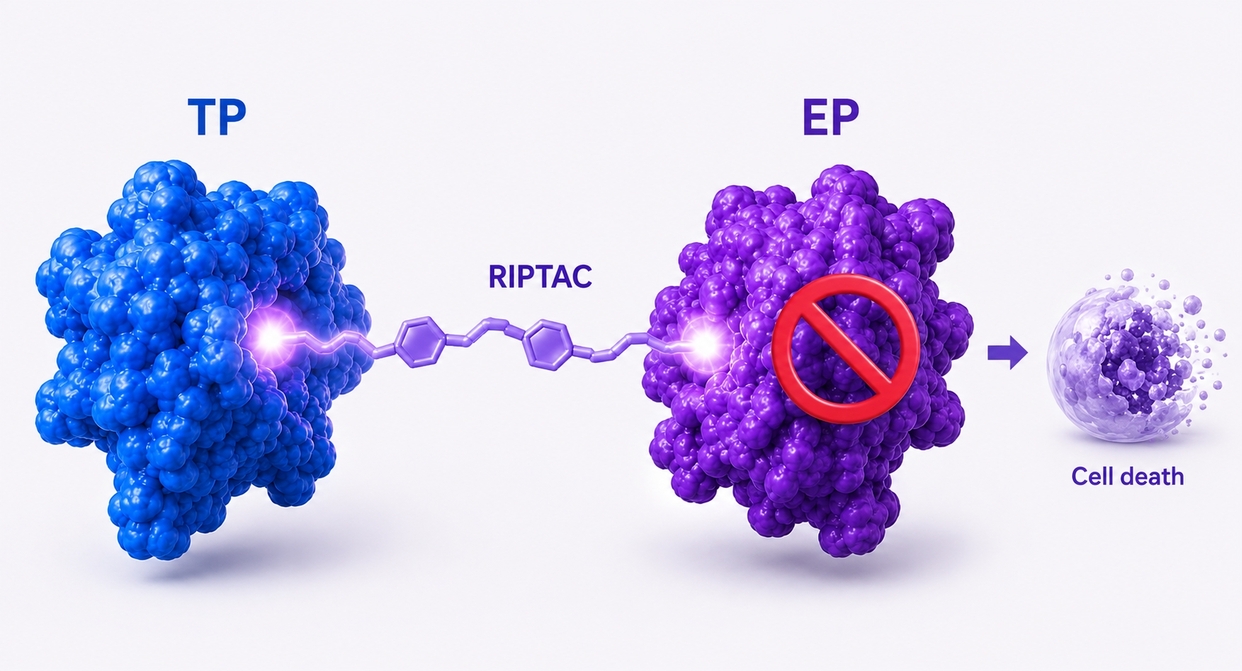
INDUCED PROXIMITY — A FIELD ANALYSIS: PART I, RIPTACs: From Proof of Mechanism to Platform
RIPTACs are usually heterobifunctional small molecules that force a durable ternary complex between a tumor-enriched target protein (TP) and a pan-essential effector protein (EP), disabling the EP only where the TP is present. 2025 was a big year for this modality. First, J&J acquired Halda Therapeutics for $3.05B, obtaining the lead asset HLD-0915 (AR × BRD4) that produced first-in-human activity in mCRPC. Then, Roche acquired Kolm Therapeutics (renamed Neli Therapeutics) for $125M upfront plus contingent milestones, including in its portfolio an AR/ER × CBP/p300 "conditional inhibitor" built on the same tumor-selective induced-proximity logic. Researchers are also exploring RIPTAC's expansion into non-tumor indications like autoimmune diseases and viral infections.
1. RIPTAC Highlights: Commercial Analysis
RIPTAC, or Regulated Induced Proximity TArgeting Chimeras, moved from concept to clinical validation with unusual speed. Proof of mechanism was published in Cell Chemical Biology (2024, first posted as a 2023 bioRxiv preprint), using a HaloTag–FKBP model target with JQ1, BI2536, TMX3013 and dinaciclib effector ligands.[1,2]
Timeline of Key Events
2023: Chemical-biology proof of mechanism posted (bioRxiv), then peer-reviewed in Cell Chem Biol 2024.[1,2]
Feb 2025: First patient dosed with HLD-0915, an oral AR × BRD4 RIPTAC, in metastatic castration-resistant prostate cancer (mCRPC) — NCT06800313.[9,10]
Jul 2025: Roche acquired Kolm Therapeutics (renamed Neli Therapeutics), a Versant-backed developer of AR/ER-anchored "conditional" heterobifunctional inhibitors (a "silent binder" to the transcriptional coactivator CBP/p300), for $125M upfront plus contingent payments; program preclinical. This is the first large-pharma acquisition in the modality.[17,18,19]
2025: FDA Fast Track designation granted (program holds Fast Track status).[6]
Oct 2025: First-in-human data presented at the AACR-NCI-EORTC plenary: among 22 patients completing ≥2 cycles, 59% PSA50 and 32% PSA90; partial response in 5/5 RECIST-evaluable patients; favorable safety with infrequent ≥grade 3 treatment-related events and maximum tolerated dose not established.[6,7]
Dec 2025: Johnson & Johnson acquired Halda Therapeutics for ~$3.05 billion in cash, the first multibillion-dollar buyout of a company built specifically on the RIPTAC “hold-and-kill” proximity modality.[11,12,13]
2026: The field expanded from one company to the sector: Flare Therapeutics closed an $85M Series C partly to fund an AR(ON) RIPTAC program, and China’s HEC Pharma and AI-drug-discovery firm Accutar formed a NewCo to incubate a RIPTAC pipeline, also starting in mCRPC.[15,16]
Two other signals carry just as significance as the acquisitions:
1. In August 2025, Halda and VantAI struck a research alliance worth over $1 billion in potential value, aimed specifically at the platform’s bottleneck: computational discovery of new target–effector pairs across oncology and immunology.[14]
2. Halda disclosed an orally bioavailable RIPTAC against the p53 Y220C mutant, indicating the modality is not confined to nuclear hormone receptors.[5]
The $3.05B outcome for a Phase 1 dataset in 31 patients reflects two things priced at once: a differentiated prostate-cancer asset, and a platform claim.[12,13] Whether the platform claim holds depends on questions that remain open, including how many viable TP–EP pairs exist, whether therapeutic index survives in tissues with even modest TP expression, and whether the modality transfers to targets less abundant and less nuclear than the androgen receptor.
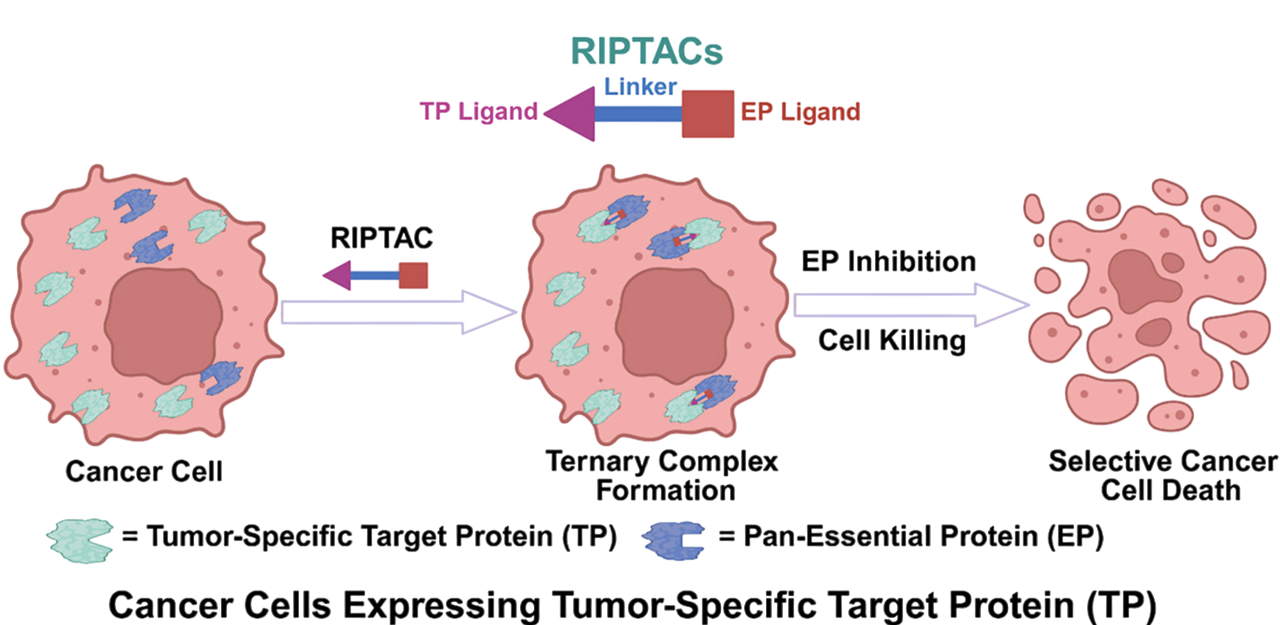
Source: J Med Chem. 2025;68(11):10503–10506. doi:10.1021/acs.jmedchem.5c01250.
Roche's Kolm/Neli purchase (preclinical, $125M) and J&J's Halda purchase (clinical, $3.05B) are both bets on the same core idea that an AR-anchored ternary complex that disables an otherwise broadly-required nuclear protein (CBP/p300 for Kolm; BRD4 for Halda) selectively in tumor cells. Kolm brands its approach "conditional inhibition" rather than "hold and kill".
2. Why RIPTACs Work
RIPTACs are heterobifunctional small molecules that force a stable, cooperative ternary complex between a target protein (TP) selectively expressed in tumor cells and a pan-essential effector protein (EP) required for cell survival. The resulting neomorphic protein–protein interaction (PPI) abrogates EP function specifically in TP-expressing cells, killing them while sparing normal tissue.[1]
The conceptual break from prior modalities is decisive: the target protein need not be an oncogenic driver, but only has to be differentially expressed. This decouples efficacy from driver biology and, in principle, from the bypass-resistance mechanisms that eventually defeat almost every driver-directed precision-oncology agent.
Based onPROTAC and molecular-glue structural biology, the apparent affinity of a ligand–protein interaction can be substantially enhanced by favorable PPIs within a ternary complex: binding of the first ligand–protein pair creates a composite surface with higher affinity for the second protein than either the small molecule or the first protein alone. Separately, some high-affinity, high-selectivity ligands are prone to concentrating in target-expressing cells. The physicochemical rules governing which ligands behave this way remain unestablished and, in itself, a discovery bottleneck. Combining the two yields the RIPTAC hypothesis: a bifunctional molecule that accumulates preferentially in TP-positive cells and forms a cooperatively stabilized complex will inactivate a pan-essential protein selectively in those cells — even though that same pan-essential protein is present in every cell in the body.
3. Mechanism of Action
RIPTAC pharmacology is a process of four coupled events:
1. Selective accumulation: The TP-binding warhead drives preferential intracellular concentration of the RIPTAC in TP-expressing cells.
2. Ternary complex formation: TP:RIPTAC:EP trimer assembly, aided by positive cooperativity from induced PPIs at the composite interface.
3. Neomorphic PPI and EP loss of function: The EP is inhibited, sterically occluded and/or mislocalized — a phenotype closer to genetic loss of function than to conventional active-site inhibition.
4. Selective cell death: Cells lacking the TP experience only weak, transient EP engagement and survive; TP-positive cells die.
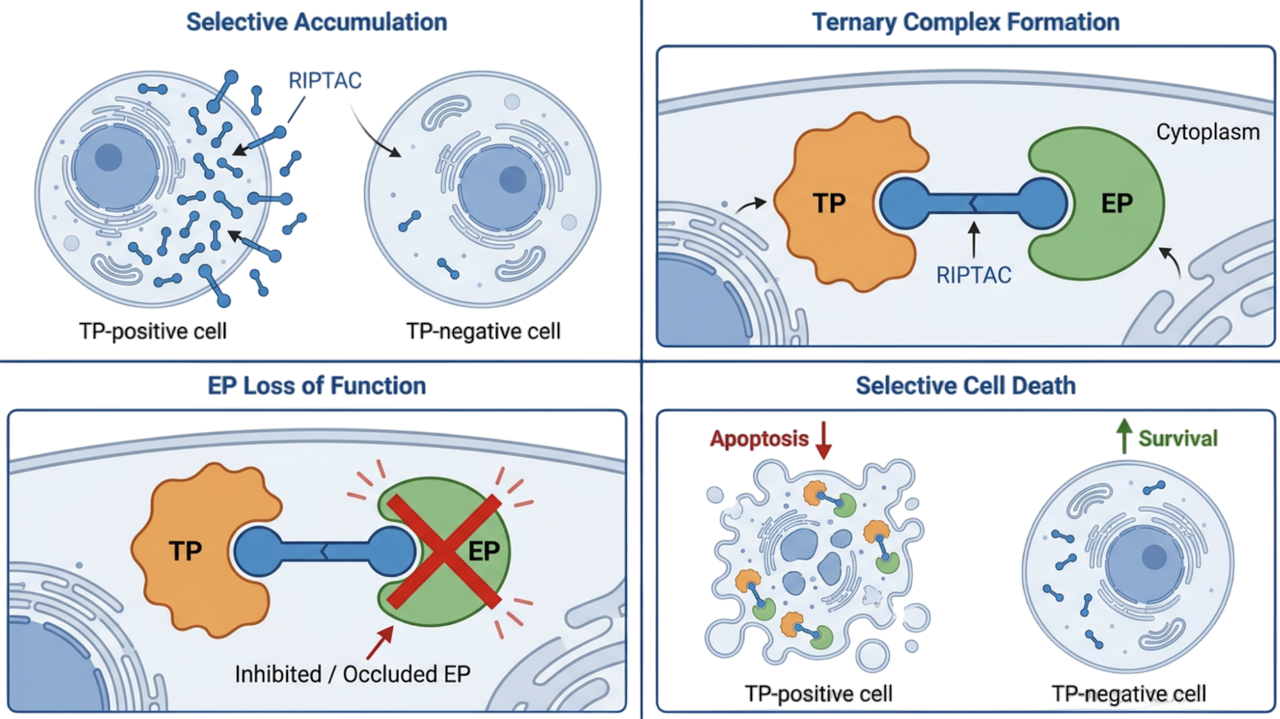
Because TP is engaged by a ligand that need not inhibit it, the TP contributes affinity, localization and abundance, not signaling. This is why a RIPTAC can remain active in tumors where the TP is mutated, amplified, or spliced in ways that would defeat a TP-directed inhibitor.[1]
The design logic is elegant in the resistance setting. A tumor under androgen-receptor pathway inhibition escapes by amplifying AR or expressing constitutively active splice variants — it makes more of the protein to survive. For an ARPI (Androgen receptor pathway inhibitors), that is resistance; for an AR-targeted RIPTAC, the same event increases target-protein abundance, and thus, increases selective accumulation and ternary-complex formation. The escape route feeds the drug.
The proof-of-mechanism study (Raina et al., 2024) used a deliberately artificial but tightly controlled system, then confirmed the key behaviors across alternative cell lines and target proteins. The mechanistically decisive findings are summarized in Table 1.
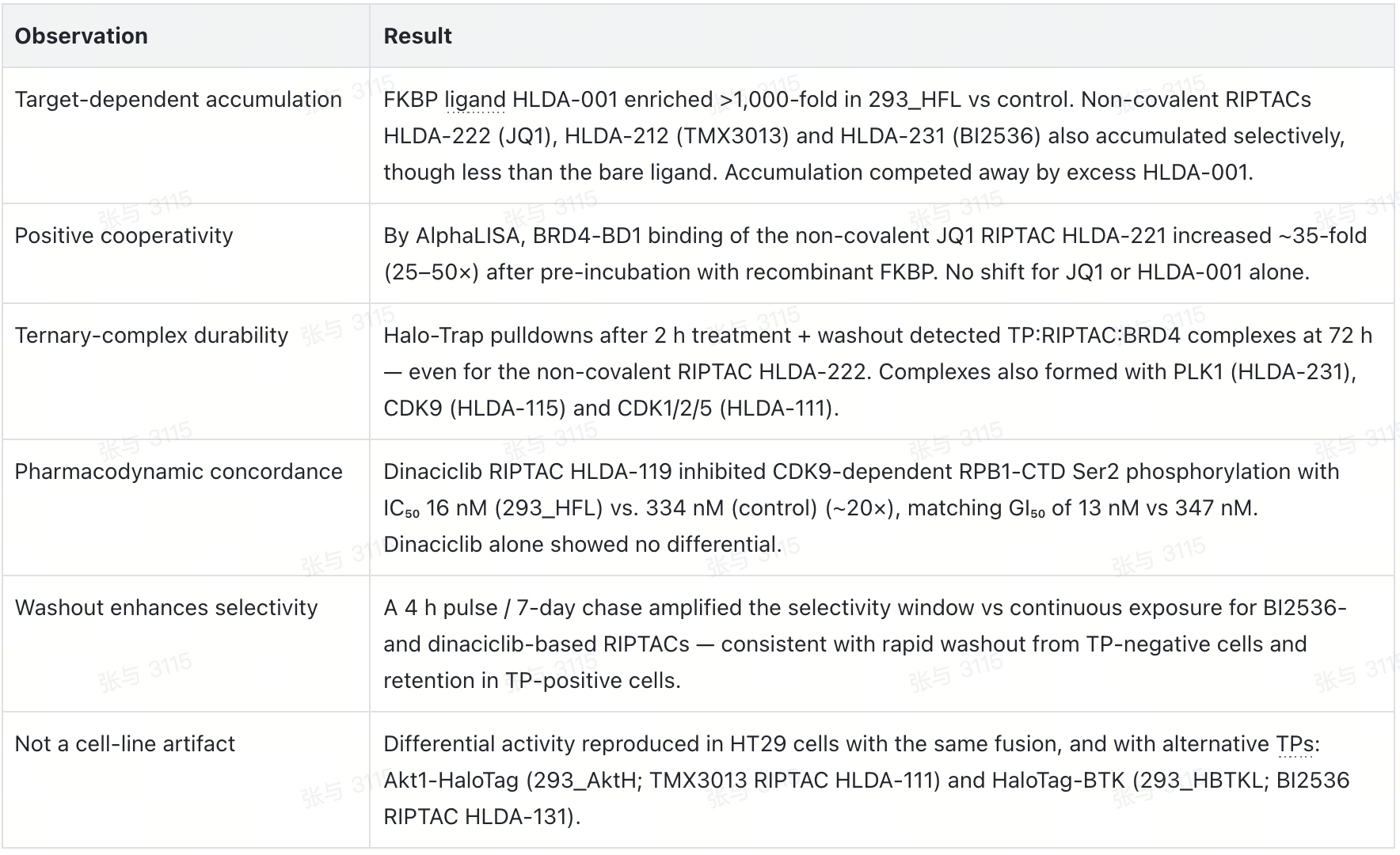
An under-discussed result is the ternary-complex half-life. Even where the TP ligand is non-covalent and the EP ligand (JQ1) is a modest, fast-off binder, the assembled trimer persists for days. This implies that RIPTAC pharmacodynamics may be governed by complex-dissociation kinetics rather than by plasma exposure, a property with direct consequences for dosing and shape of the therapeutic window.
4. Target Analysis: Choosing the TP
- Differential expression, not driver status. The TP must be substantially more abundant in tumor than in normal tissue; it need not be mutated, activated or functionally required.
- Absolute abundance. The model TP reached 1–3 µM intracellular concentration. Whether the modality tolerates TPs an order of magnitude scarcer is a central open question for platform breadth.
- Ligandability. A tractable pocket is required, but affinity requirements are relaxed by cooperativity; weak or transient TP ligands can yield functional RIPTACs.
- Subcellular localization compatible with the EP.
- Lineage restriction is ideal. AR in prostate, ER in breast, and lineage antigens generally, mirror the logic that made CD19 a successful CAR-T/ADC target — here extended to intracellular proteins.
Experimentally demonstrated TPs to date include AR, ER, the FKBP model target, p53 Y220C and BTK; peer-reviewed commentary notes that the set of TPs explored for RIPTACs remains small (essentially AR, ER, FKBP and p53 Y220C), while additional targets like KRAS, HER2, EGFR and IDH1 are considered candidates. Reported clinical and preclinical work is concentrated on AR.[1,5]
5. Target Analysis: Choosing the EP
EPs were nominated from published CRISPR dropout-screen data, then filtered by the potency, selectivity, and validation depth of available chemical matter. The EPs used in the disclosed work are proteins that had previously failed as standalone drug targets on therapeutic-index grounds, which is precisely the point: RIPTACs attempt to reclaim a graveyard of good pharmacology.
Kolm/Neli's disclosed EP is the transcriptional coactivator CBP/p300, a textbook example of "graveyard of good pharmacology." CBP/p300 bromodomain and HAT inhibitors have repeatedly stalled on narrow therapeutic index because the coactivators are required in normal tissue. Kolm's pitch is precisely that an AR/ER-conditional ternary complex reclaims CBP/p300 by restricting its inhibition to hormone-receptor-high tumor cells. Mechanistically, this is the same "reclaim an intolerable EP via a tumor-restricted anchor" logic.
6. The TP–EP Pairing Problem
This is the platform’s biggest constraint. Cells expressing nuclear-localized (293_NLS2HF) or plasma-membrane-localized (293_MYRHF) versions of the fusion protein revealed that:[1]
- Covalent RIPTACs incorporating JQ1, TMX3013 and BI2536 all lost potency when the TP was membrane-restricted.
- The FKBP–BRD4 RIPTAC HLDA-222 clearly preferred a nuclear TP, as expected for a nuclear EP.
- Non-covalent RIPTACs were generally more tolerant of TP–EP localization mismatch than covalent ones, possibly because reversible binding permits sampling of productive geometries rather than irreversibly trapping unproductive ones.
The practical rule: nuclear EPs (BRD4, CDK9) pair with nuclear TPs; cytoplasmic or membrane TPs will require a different EP class. With hundreds of candidate combinations and only a handful of functional pairs demonstrated, pair discovery, not chemistry, is currently the rate-limiting step. This is the exact bottleneck the VantAI alliance is meant to attack computationally.[1,14]
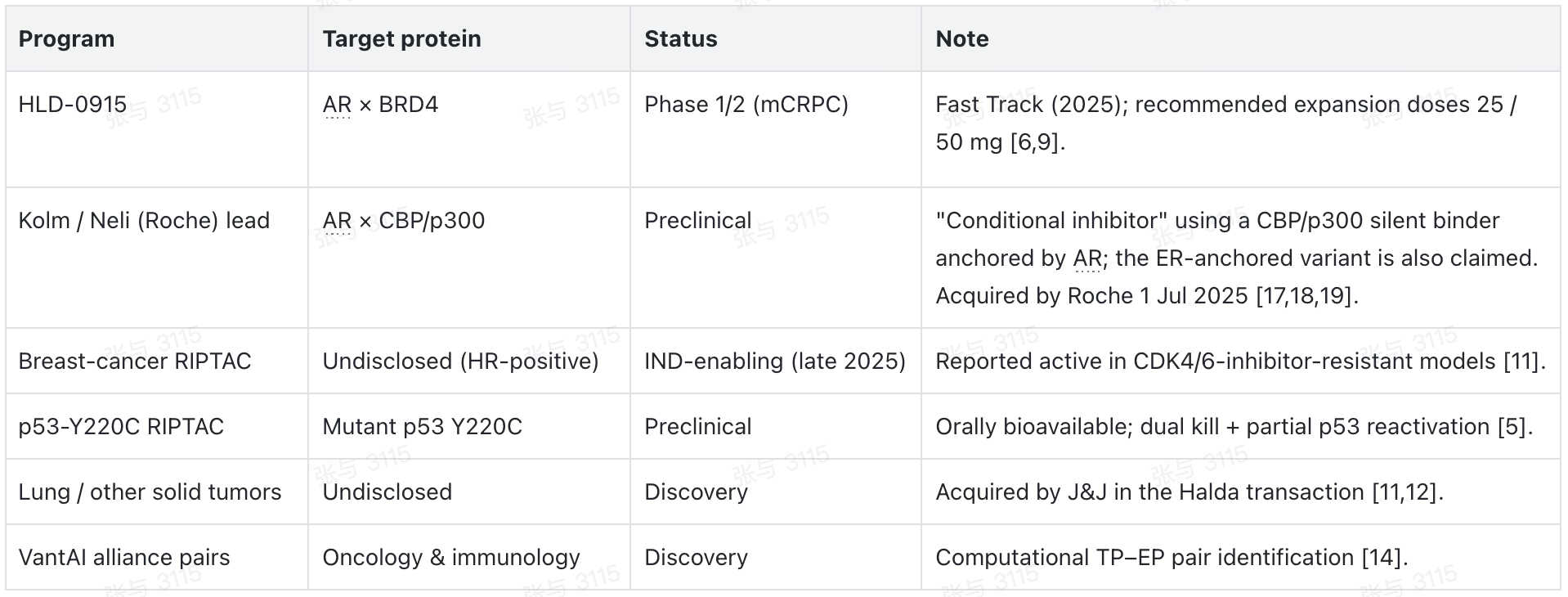
HLD-0915 pairs full-length androgen receptor (FL-AR) as TP with BRD4 as EP. The rationale is close to ideal for a first-in-modality asset: AR is a lineage-defining, highly abundant, nuclear protein in prostate adenocarcinoma with limited normal-tissue expression and decades of antiandrogen chemistry to draw on; BRD4 is nuclear, pan-essential and richly ligandable, with well-characterized PD markers (cMYC, HEXIM1, TXNIP) that track trimer formation in tumor tissue.[9]
The Kolm/Neli program is a near-perfect illustration of the same nuclear-TP/nuclear-EP rule: AR (or ER) as the nuclear anchor paired with the nuclear coactivator CBP/p300. That two independently-funded teams converged on AR × (BRD4 | CBP/p300), both bromodomain-bearing nuclear transcriptional machinery, underscores how narrow the demonstrated productive-pair space still is.
Critically, HLD-0915 activity requires only the presence of FL-AR, and is retained irrespective of AR amplification, ligand-binding-domain mutation or AR-V7 splice-variant expression — the very lesions that drive ARPI resistance. (AR-V7 lacks the LBD, so a variant-only tumor would be a genuine escape route; the clinical data to date show activity in AR-V7-positive patients, who retain FL-AR alongside the variant.)[5,6]
7. HLD-0915
The structure of HLD-0915 is not yet publicly disclosed (see Fig. 3 for predicted structure), but its properties are consistent with a well-optimized beyond-Rule-of-5 (bRo5) heterobifunctional:[9]

Composition: an AR-binding TP ligand (probably from a non-steroidal antiandrogen scaffold), a linker, and a BRD4-binding EP ligand, joined with defined orientation.
Route and schedule: oral, once daily, 21-day cycles; notable for a molecule of this class.
Human PK: Tₘₐₓ 4–6 h; steady state by Cycle 2 Day 1; 2–5× accumulation for AUC₀₋₂₄; dose-proportional exposure across 12.5, 25 and 50 mg and less than dose-proportional at 100 mg (the classic signature of solubility- or absorption-limited exposure at the top dose).
Active dose range: 12.5–50 mg QD, with PSA90 responses seen at 12.5 mg; activity at the lowest dose tested is a strong sign of an efficient mechanism.
Selected expansion doses: 25 mg and 50 mg.[6]
Efficacy signal (AACR-NCI-EORTC, Oct 2025). Across all 31 treated patients, ~31% achieved PSA50 and ~23% PSA90; among the 22 patients completing ≥2 cycles these rose to 59% and 32%, and in the 50 mg ≥2-cycle subgroup (n=10) to 70% and 40%. All 5 patients with RECIST-measurable disease and an on-treatment scan had partial responses at first assessment; 13/16 evaluated patients showed ctDNA tumor-fraction reductions of 70–99.9%; median time to PSA50 was ~37 days. Treatment-related adverse events were infrequent and generally low-grade, with no thrombocytopenia reported and the maximum tolerated dose not reached.[6,7]
Trial design. NCT06800313 is a first-in-human, multicenter, open-label Phase 1/2 in mCRPC. Phase 1 dose escalation used a Bayesian Optimal Interval (BOIN) design (≥3 patients per cohort; backfill up to twelve), generally requiring RECIST-measurable disease. Eligibility: progressive mCRPC with rising PSA (≥2 ng/mL), ≥1 prior ARPI, up to two prior taxanes and up to one prior radioligand therapy, ECOG 0–1. Planned enrolment up to 190 patients; first patient dosed February 2025; primary completion expected April 2028.[9,10]
8. Competitive Landscape
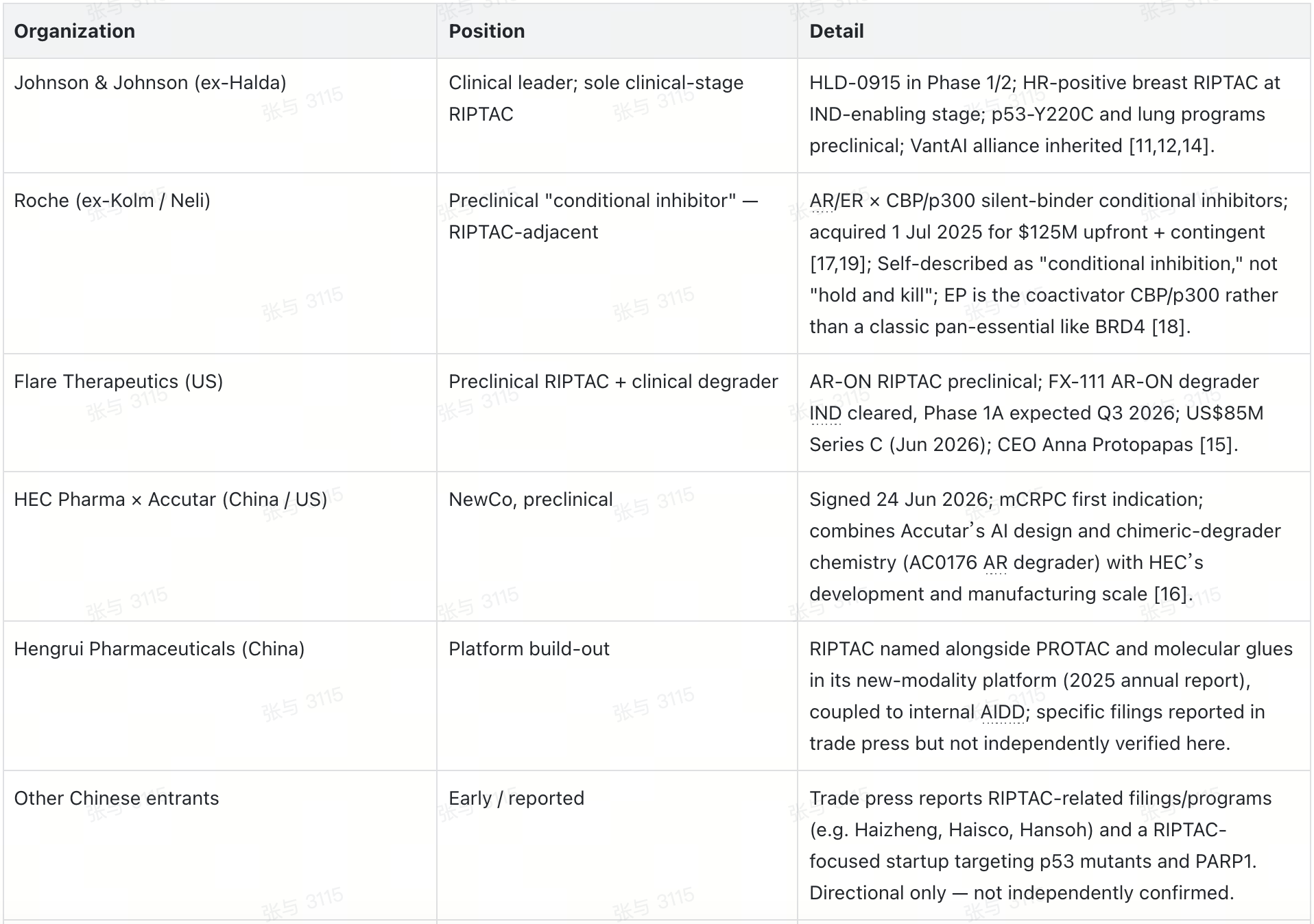
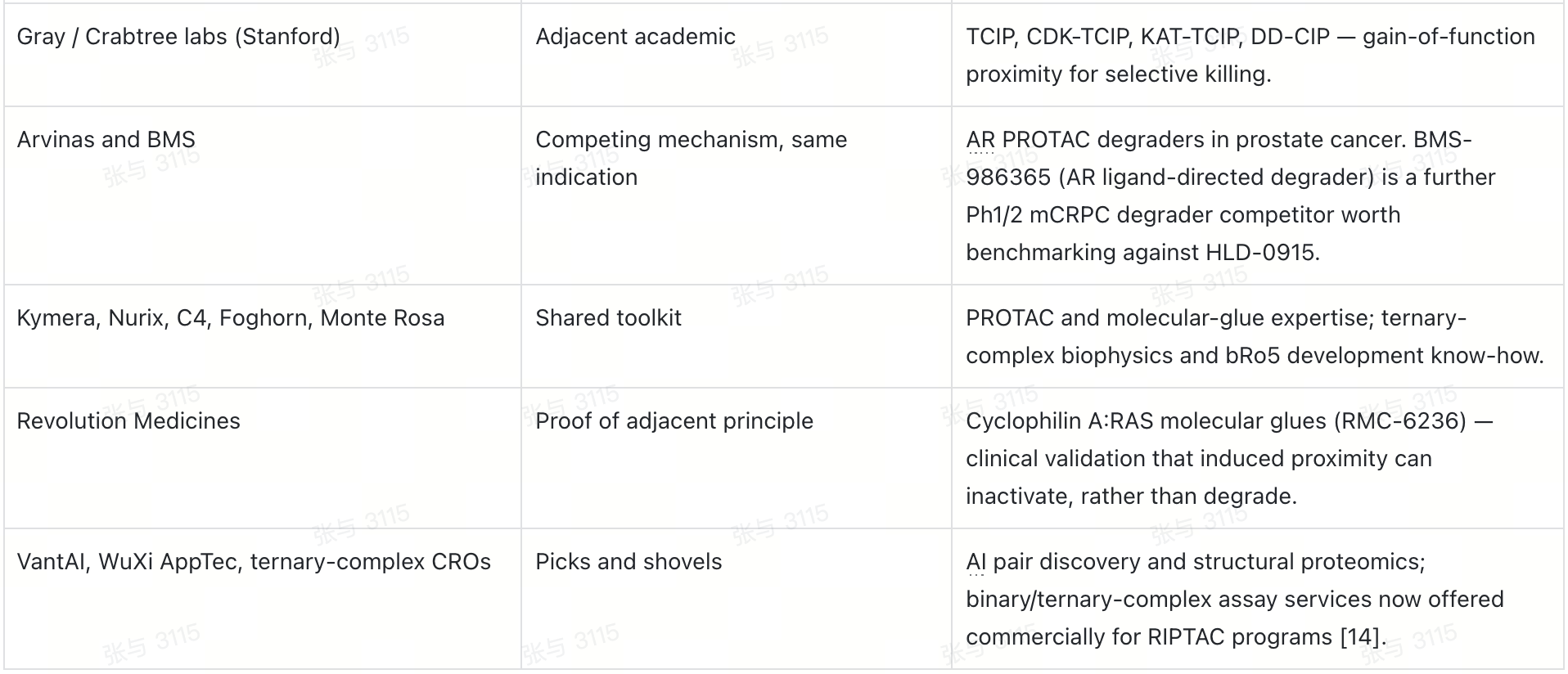
The 3 key takeaways:
1. No disclosed competitor has a clinical RIPTAC - J&J’s lead is real and probably two to three years wide, and second large pharma (Roche, via Kolm/Neli) already owns a preclinical program in this exact AR-anchored space.
2. The competitive threat is less “another RIPTAC” and more “another route to cancer-selective killing at an intracellular target”: TCIPs, tumor-selective molecular glues, and degraders with engineered tissue restriction.
3. The crowding is concentrating on mCRPC — Halda/J&J, Roche/Kolm, Flare and HEC/Accutar all start there — so second and third entrants will be benchmarked against HLD-0915 data that already exists.[15,16]
9. Future Outlook
HLD-0915: End-of-Phase-2 interaction and design of a registrational study; J&J has stated an intention to accelerate the Phase 1/2 program.[11]
Flare FX-111: Phase 1A entry (Q3 2026) for the AR-ON degrader will read out on whether conformation-selective AR targeting is tolerable, relevant context for any AR-ON RIPTAC that follows.[15]
New entrants: First candidate nominations from the HEC × Accutar NewCo and from Hengrui’s platform will indicate whether Chinese entrants pursue AR fast-follow or differentiated TP–EP pairs.[16] Watch whether Roche advances the Kolm/Neli AR × CBP/p300 program into IND-enabling studies. A Roche clinical entry would put a second big-pharma RIPTAC-class asset into the mCRPC race and test whether CBP/p300 offers a therapeutic window comparable to BRD4.
Structural biology & computation: Ternary-complex structures and prediction of cooperativity are the field’s clearest path from empirical screening to rational design.[14]
Beyond oncology: RIPTAC logic generalizes any site a pathological cell population can be distinguished by a differentially expressed intracellular protein, like virally infected cells (viral protein as TP), senescent cells, autoreactive lymphocyte subsets, or fibrotic myofibroblasts.[14]
Bottom line.: The mechanism is supported by first-in-human activity; the acquisition validated the asset and, tentatively, the platform. The decisive uncertainties are quantitative, markedly TP abundance thresholds, the true size of the viable TP–EP pair space, and localization compatibility, and these will determine how far the modality travels beyond AR.
Thank you to authors Meng Wang (wangmeng@dp.tech) and Fangyuan Nie (niefangyuan@dp.tech) who contributed to the content in this article.
The next article in our series, Neighbors in Proximity: PROTACs, Molecular Glues, TCIPs, RIPTACs, will present a full induced-proximity toolkit and explain how these modalities actually differ. Degraders (PROTACs) tag a protein for destruction; molecular glues (MGs) reshape a surface to recruit a neosubstrate; TCIPs and related transcriptional/kinase chimeras hijack proximity to switch a lethal activity on; RIPTACs hold a pan-essential effector hostage in the wrong cell. Each modality buys selectivity through a different route — catalytic turnover, cooperativity, event-driven pharmacology, or differential expression — and each pays a different price in chemistry and translational risk.
References
[1] Raina K, Forbes CD, Stronk R, Rappi JP Jr, Eastman KJ, Zaware N, et al. Regulated induced proximity targeting chimeras—RIPTACs—A heterobifunctional small molecule strategy for cancer selective therapies. Cell Chem Biol. 2024;31(8):1490–1502.e42. doi:10.1016/j.chembiol.2024.07.005. https://pubmed.ncbi.nlm.nih.gov/39116881/
[2] Raina K, et al. Regulated Induced Proximity Targeting Chimeras (RIPTACs): a Novel Heterobifunctional Small Molecule Therapeutic Strategy for Killing Cancer Cells Selectively (preprint). bioRxiv. 2023;2023.01.01.522436. doi:10.1101/2023.01.01.522436 (PMID 36711980). https://www.biorxiv.org/content/10.1101/2023.01.01.522436v1
[3] Feel the breeze: Opening the therapeutic window with RIPTACs and induced proximity (Preview/commentary). Cell Chem Biol. 2024;31(8). https://www.cell.com/cell-chemical-biology/fulltext/S2451-9456(24)00315-5
[4] Kingwell K. RIPTACs expand anticancer target space. Nat Rev Drug Discov. 2024;23(10):742. https://www.nature.com/articles/d41573-024-00146-9
[5] RIPTACs for Precision Cancer Therapy: A Novel Modality with the Inspiration of HLD-0915 as the First Candidate in Clinical Trials (Perspective). J Med Chem. 2025;68(11):10503–10506. doi:10.1021/acs.jmedchem.5c01250. https://pubs.acs.org/doi/10.1021/acs.jmedchem.5c01250
[6] Halda Therapeutics. First-in-Human Results for HLD-0915 Demonstrating Encouraging Safety and Anti-Tumor Activity in mCRPC (AACR-NCI-EORTC plenary). GlobeNewswire, 24 Oct 2025. https://www.globenewswire.com/news-release/2025/10/24/3172912/0/en/Halda-Therapeutics-Announces-First-in-Human-Results-for-HLD-0915-an-Oral-RIPTAC-Therapeutic-Demonstrating-Encouraging-Safety-and-Anti-Tumor-Activity-in-Metastatic-Castration-Resist.html
[7] UT MD Anderson Cancer Center. New oral therapy shows early signs of safety and effectiveness in patients with advanced, treatment-resistant prostate cancer. 24 Oct 2025. https://www.mdanderson.org/newsroom/research-newsroom/new-oral-therapy-shows-early-signs-of-safety-and-effectiveness-i.h00-159780390.html
[8] Halda Therapeutics. Oral plenary presentation announcement, 2025 AACR-NCI-EORTC International Conference. GlobeNewswire, 14 Oct 2025. https://www.globenewswire.com/news-release/2025/10/14/3166101/0/en/halda-therapeutics-announces-oral-plenary-presentation-on-hld-0915-clinical-data-in-metastatic-castration-resistant-prostate-cancer-mcrpc-at-2025-aacr-nci-eortc-international-confe.html
[9] Halda Therapeutics. An Oral Prostate Cancer RIPTAC Therapeutic in Phase 1 (HLD-0915) — ASCO 2025 Trials-in-Progress poster (TPS5115). https://haldatx.com/wp-content/uploads/2025/06/KKB-ASCO-TIP-HLD-0915-June2025_FinalMay13.pdf
[10] ClinicalTrials.gov. A Study of HLD-0915 in Participants With mCRPC. NCT06800313. https://clinicaltrials.gov/study/NCT06800313
[11] Johnson & Johnson. Set to Revolutionize the Treatment of Cancer With the Acquisition of Halda Therapeutics. 17 Nov 2025. https://www.investor.jnj.com/investor-news/news-details/2025/Johnson--Johnson-Set-to-Revolutionize-the-Treatment-of-Cancer-With-the-Acquisition-of-Halda-Therapeutics/default.aspx
[12] Johnson & Johnson. Completes acquisition of Halda Therapeutics and its novel platform. Dec 2025. https://www.jnj.com/media-center/press-releases/johnson-johnson-completes-acquisition-of-halda-therapeutics-and-its-novel-platform-to-revolutionize-cancer-treatment-and-enable-next-generation-oral-therapies
[13] Johnson & Johnson. Form 10-Q, FY2026 (Halda acquisition accounting; closing 26 Dec 2025; ~$3.05B). U.S. SEC. https://www.sec.gov/Archives/edgar/data/0000200406/000020040626000153/jnj-20260628.htm
[14] VantAI and Halda Therapeutics Forge Alliance to Discover Next-Generation RIPTAC Medicines (research collaboration >US$1B potential value). Business Wire, 19 Aug 2025. https://www.businesswire.com/news/home/20250819757409/en/VantAI-and-Halda-Therapeutics-Forge-Alliance-to-Discover-Next-Generation-RIPTAC-Medicines
[15] Flare Therapeutics. Secures $85M Series C and Appoints Anna Protopapas as CEO (ARON degrader FX-111; ARON RIPTAC program). 30 Jun 2026. https://www.flaretx.com/flare-therapeutics-secures-85m-in-insider-led-series-c-financing-and-appoints-anna-protopapas-as-chief-executive-officer/
[16] HEC Pharma (Guangdong HEC) × Accutar Biotechnology. NewCo to incubate a RIPTAC pipeline, first indication mCRPC. 24 Jun 2026. https://www.hec-al.com/sys-nd/516.html
[17] Roche Holdings, Inc. Half-Year Report 2025 — acquisition of Kolm Therapeutics (preclinical conditional small-molecule oncology programme; closed 1 Jul 2025; USD 125M cash consideration plus contingent payments). https://assets.roche.com/f/176343/x/00c5f2ad11/rh-hy-2025.pdf
[18] Kolm Therapeutics patents new CBP/p300 heterobifunctional conditional inhibitors (disease-dependent-protein binder [CBP/EP300] linked to a disease protein [androgen receptor]). BioWorld Science, 11 Nov 2025. https://www.bioworld.com/articles/726007
[19] Neli Therapeutics (formerly Kolm Therapeutics) — acquired by Roche 1 Jul 2025; Versant Ventures portfolio ("conditional small molecules"). PitchBook profile 552642-76; Versant Ventures portfolio page.

Our mission is to democratize computational drug discovery tools and empower researchers and organizations worldwide.