

Neighbors in Proximity: PROTACs, MGs, TCIPs, RIPTACs or Other Modalities?
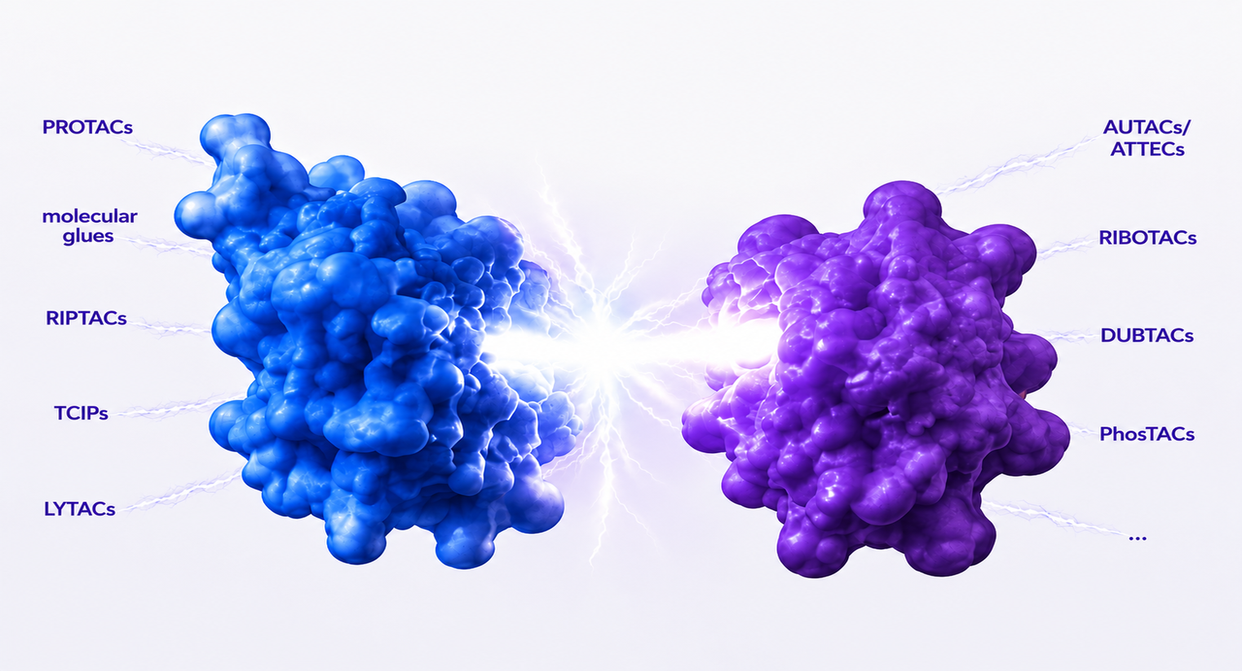
INDUCED PROXIMITY — A FIELD ANALYSIS: PART II, PROTACs, Molecular Glues, TCIPs, RIPTACs — and What Else
Part I examined RIPTACs on their own terms. Here we widen the lens to the full family of induced-proximity therapeutics, drugs that work not by occupying an active site but by inducing proximity between two biomolecules and letting the resulting neomorphic complex do the pharmacology. We organize the field by asking what is recruited, to what, and to what end, and compare the leading modalities (PROTACs, molecular glues, RIPTACs, TCIPs) alongside the wider toolbox (LYTACs, AUTACs/ATTECs, RIBOTACs, DUBTACs, phosphorylation- and phosphatase-recruiting chimeras and more). The headline for 2026 is that the paradigm has produced its first approval of a rationally designed heterobifunctional degrader — vepdegestrant (VEPPANU), the first FDA-approved PROTAC — extending a lineage of induced-proximity small molecules that already included the long-approved IMiD molecular glues, while next-generation glues advance toward regulatory decisions and RIPTACs and TCIPs stake out complementary “hold-and-kill” and “gain-of-function” niches. The conclusion is that these modalities are less competitors and more of a portfolio: each buys selectivity through a different mechanism and pays for it through different chemistry and translational risks.
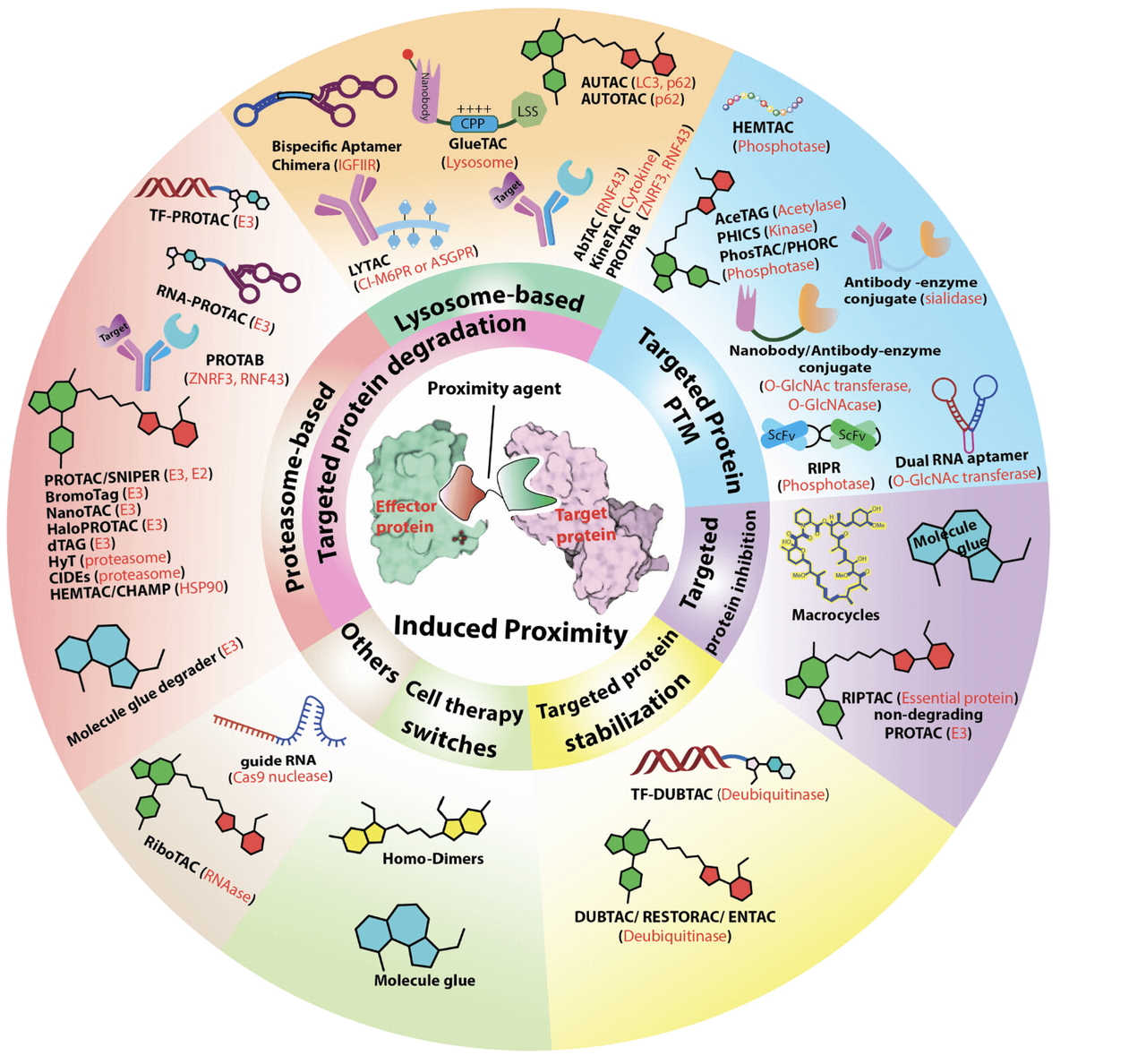
1. The Induced-Proximity Paradigm
For a century, small-molecule pharmacology meant occupancy: a drug binds a pocket and blocks a function. Induced-proximity therapeutics break that mould. Instead of inhibiting a target directly, they use a molecule to induce proximity between two biomolecules, and the resulting ternary complex carries out the therapeutic act — degradation, stabilization, mislocalization, post-translational modification, or transcriptional rewiring.[1, 2]
This shifts the design goal from “block activity” to “manage protein fate,” and it brings two conceptual advantages. First, it is often event-driven and catalytic: a single degrader molecule can trigger destruction of many target copies, so efficacy is decoupled from sustained high occupancy — though catalysis is a property of the degradative and enzyme-recruiting branches, not of induced proximity as such, as the occupancy-driven RIPTACs below make clear. Second, it expands the druggable proteome, because the target ligand no longer needs to engage a functional site, a shallow or allosteric pocket that merely provides a grip is enough.[3]
The cost of this freedom is complexity. Efficacy now depends on a productive ternary complex of geometry, cooperativity, and residence time, rather than on binary affinity alone, and on the availability and tissue distribution of the recruited machinery (an E3 ligase, a lysosomal receptor, a transcriptional coactivator). The modalities below are best understood as different answers to one question: what do we recruit, to what, and to what end?
Figure 1. Mechanisms and modalities of induced proximity
2. PROTACs: Catalytic Degradation via the Ubiquitin–Proteasome System
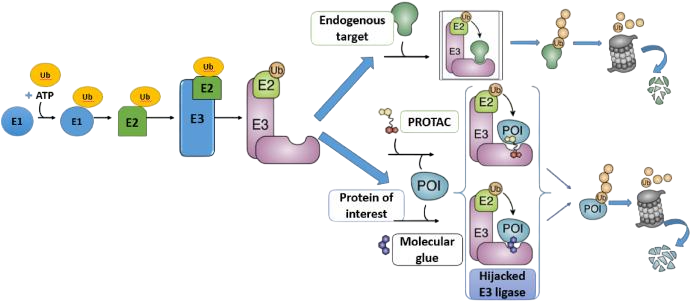
Proteolysis-targeting chimeras (PROTACs) are bifunctional molecules with a target-protein ligand and an E3-ubiquitin-ligase ligand joined by a linker. Recruiting an E3 substrate receptor (most commonly CRBN or VHL, within the CRL4–CRBN and CRL2–VHL cullin–RING ligase complexes) to the target drives transfer of K48-linked polyubiquitin chains and degradation by the 26S proteasome. Because the PROTAC is not consumed and dissociates from the ternary complex after ubiquitin transfer, one molecule can degrade successive copies of the target: degradation is catalytic and can be sustained at sub-stoichiometric drug-to-target ratios — the defining pharmacological advantage over occupancy-driven inhibitors.
Figure 2. The PROTAC catalytic degradation cycle
The clinical milestone of the field arrived in 2026: vepdegestrant (VEPPANU), an oral PROTAC estrogen-receptor degrader from Arvinas and Pfizer, became the first-ever FDA-approved PROTAC. It cleared in May 2026, ahead of its June PDUFA date, for ESR1-mutated, ER+/HER2- advanced or metastatic breast cancer after prior endocrine therapy, with Guardant360 CDx as companion diagnostic.[5,6,7] Approval rested on the Phase 3 VERITAC-2 trial (624 patients, of whom 270 had ESR1 mutations), in which vepdegestrant improved median progression-free survival versus fulvestrant in the ESR1-mutant population (5.0 vs 2.1 months; HR 0.57, 95% CI 0.42–0.77; p = 0.0001). The result in the intention-to-treat population did not reach statistical significance (HR 0.83; p = 0.07), which is why the indication is restricted to ESR1-mutant disease and why an FDA-authorized companion test is required; overall survival remains immature.[7,8,50] The mechanistic logic is removal rather than blocking: by eliminating the receptor, the drug depends less on the ligand-binding conformation that constitutively active ESR1 LBD mutants distort. The comparison should be read with care, however: fulvestrant is itself a selective ER degrader, so the incremental benefit reflects more complete and more consistent receptor elimination — aided by oral dosing and reliable exposure — rather than degradation versus occupancy per se.[6]
Behind the lead are a maturing pipeline and widening target set: Arvinas alone reports ARV-102 (a CNS-penetrant LRRK2 degrader in Parkinson’s disease), ARV-393 (BCL6), ARV-6723 (HPK1) and a pan-KRAS degrader, and peers (Kymera, Nurix, C4, BeiGene and others) span oncology and immunology.[9] PROTACs remain the most clinically advanced heterobifunctional modality, and their liabilities are equally well characterized: large, beyond-Rule-of-5 molecules with challenging oral exposure; dependence on E3 ligases whose expression and activity vary between tissues and can be lost under therapeutic selection; and the “hook effect,” in which excess drug saturates each partner separately and forms unproductive binary complexes at the expense of the productive ternary complex.
3. Molecular Glues: Monovalent Proximity and Neosubstrate Recruitment
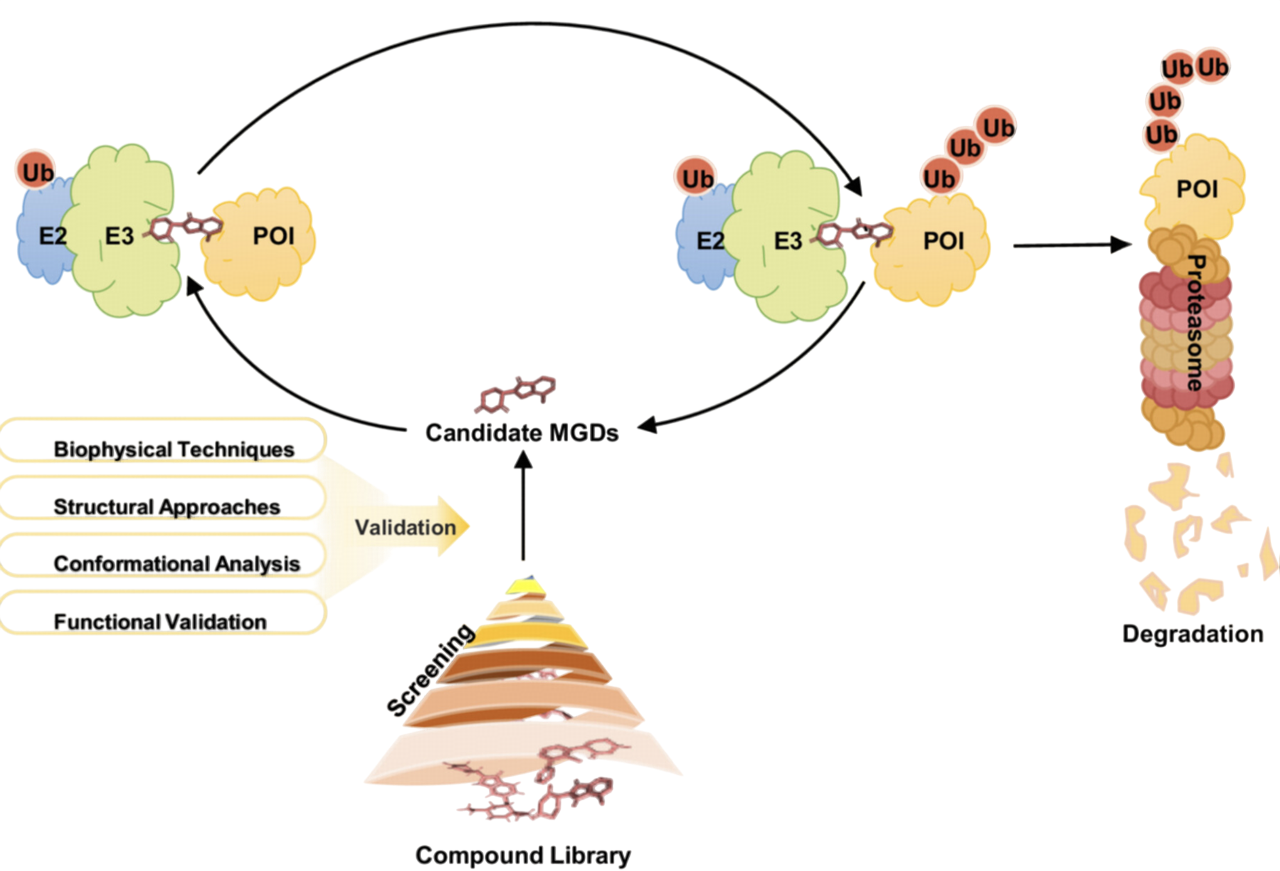
Molecular glues are monovalent: a single small molecule binds predominantly to one partner, usually the ligase, and remodels or completes its surface so that a protein which is not a natural substrate becomes one. Because affinity for the neosubstrate is largely created by the composite drug–ligase surface, glue action is strongly cooperative and often shows little or no measurable binary affinity for the target alone; potency therefore cannot be predicted from target binding, which is what makes these compounds hard to find by conventional screening. Lacking a linker, glues are generally smaller and more drug-like than PROTACs, at the cost of rational tractability — though degradation proteomics at proteome scale and structure- and surface-based computational mining are converting glue discovery from serendipity into a search problem.[14,49]
Figure 3. Molecular glue degraders (MGDs)
CELMoDs (cereblon E3 ligase modulatory drugs). Iberdomide (CC-220), combined with daratumumab and dexamethasone, has an NDA under Priority Review with a PDUFA date of 17 August 2026 and would be the first approved CELMoD; the filing rests on minimal residual disease (MRD) negativity, one of two primary endpoints alongside PFS, in the Phase 3 EXCALIBER-RRMM trial (IberDd versus daratumumab–bortezomib–dexamethasone)[16]. Mezigdomide (CC-92480) followed: in SUCCESSOR-2 (MeziKd vs Kd; 479 patients analyzed),the median PFS was 18.0 vs 8.3 months (HR 0.48, 95% CI 0.36–0.63; p < 0.0001), but because the median follow-up was only 10.6 months, so durability and overall survival are not yet established; The results are published in The Lancet, and the FDA accepted the NDA in July 2026 with a PDUFA date of 13 May 2027.[51] Golcadomide is in two Phase 3 trials in lymphoma — GOLSEEK-1 (+R-CHOP, untreated high-risk LBCL) and GOLSEEK-4 (+rituximab, R/R FL).[10]
Purpose-built MGDs. CR8, an analogue of a CDK inhibitor, acts as a glue by promoting an interface between CDK12–cyclin K and DDB1, the CRL4 adaptor — recruiting the ligase without any substrate receptor and degrading cyclin K. It established that glue surfaces can be built outside the IMiD chemotype and outside CRBN. Monte Rosa (MRT-6160/DDY391 against VAV1, licensed to Novartis and in Phase 2a/b in Sjögren’s disease; MRT-2359 against GSPT1, developed for MYC-driven tumors and now in Phase 2 with apalutamide in AR-mutant mCRPC; MRT-8102 against NEK7 in NLRP3/IL-1-driven inflammation) and C4 Therapeutics (cemsidomide; degrader-antibody conjugates with Roche) are industrializing the discovery cycle.[11,12,13]
Breaking the degron. The governing constraint had been that CRBN neosubstrates present a structural β-hairpin G-loop. Also, most recently, a CRBN glue degrades KAT2A with no degron at all: a 2.9 Å cryo-EM structure shows the compound enclosing a single solvent-exposed tyrosine (Y200) within an α-helix, with most of the binding energy supplied by an unusually large protein–protein interface. Selectivity over KAT2B is near-complete even though KAT2B shares roughly 71% identity across the relevant N-terminal domain and carries a tyrosine at the equivalent position.
Glues that occlude rather than degrade. Not all induced proximity routes to the proteasome. Daraxonrasib (RMC-6236), a sanglifehrin A–derived bRo5 macrocycle, binds cyclophilin A (CypA); the drug–CypA binary complex presents a composite neosurface that engages GTP-bound RAS(ON) and sterically occludes the effector interface used by RAF and PI3K (PDB 9BG6).[46] RAS and CypA do not associate physiologically — the tri-complex is wholly drug-created, the defining glue signature. Note that the mechanism is occlusion, not degradation: the drug is stoichiometric with respect to RAS and is not catalytic in the degrader sense. In the Phase 3 RASolute 302 trial in previously treated metastatic PDAC, which carried dual primary endpoints in the RAS G12-mutant population, median overall survival in the overall population was 13.2 vs 6.7 months for chemotherapy (HR 0.40; p < 0.0001), with a concordant progression-free survival benefit; a regulatory submission is under way and the FDA has permitted expanded access ahead of a decision.[47] Elironrasib (RMC-6291, G12C) and zoldonrasib (RMC-9805, G12D) apply the same tri-complex architecture with covalent target engagement.[48] This qualifies the drug-likeness claim, macrocycles, not compact heterocycles, but establishes drug-induced proximity as a Phase 3–validated mechanism outside CRBN and outside proteolysis.
Relative to RIPTACs. Glues and RIPTACs share dependence on cooperative ternary complexes; they differ in the purpose of the induced complex. A degrader glue recruits machinery to destroy the target; a tri-complex glue recruits an abundant chaperone to occlude it; a RIPTAC recruits a pan-essential effector to be disabled in the target's cell. The organizing axis is therefore destruction, occlusion, or hostage-taking — not glue versus RIPTAC.
4. RIPTACs: Hold-and-Kill
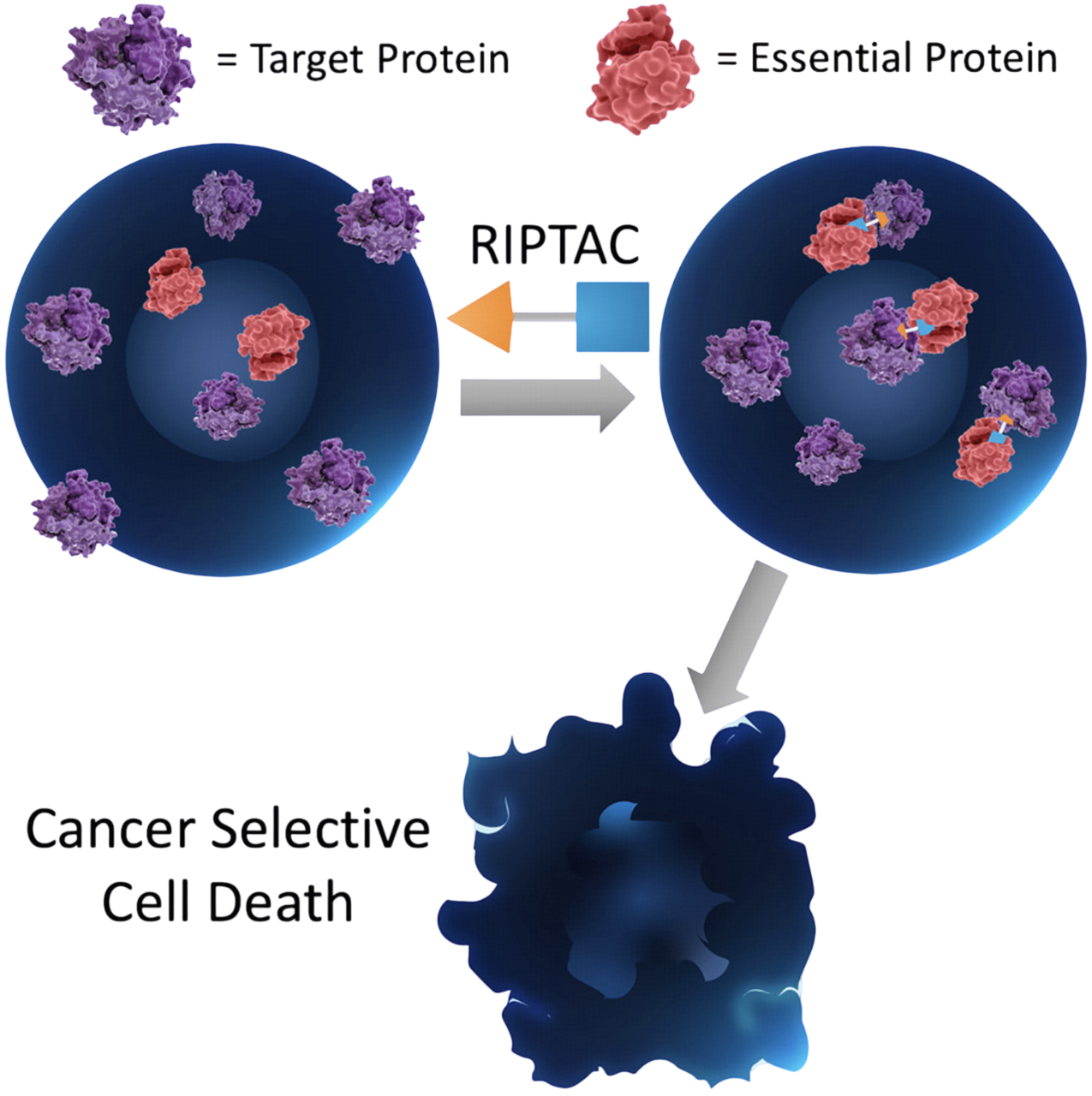
Part I covered RIPTACs in depth; here we place them among their neighbors. A RIPTAC forces a durable ternary complex between a tumor-enriched target protein (TP) and a pan-essential effector protein (EP), disabling the EP only in cells that express the TP. The distinguishing move is that the TP does not need to be a driver or degraded — it contributes abundance, localization and affinity, not signaling. This makes RIPTACs the family’s clearest example of selectivity purchased from differential expression rather than from catalysis or neosubstrate chemistry.[15]
5. TCIPs and Gain-of-Function Proximity
Transcriptional/epigenetic chemical inducers of proximity (TCIPs) invert the degrader logic: instead of removing something, they switch a lethal program on. The Stanford prototypes join a ligand for BCL6, a lymphoma-associated transcriptional repressor, to a ligand for a transcriptional activator, BRD4 in TCIP1 and CDK9 in the CDK-TCIP series, through a covalent linker within the molecule; both ends engage their proteins non-covalently. The activator is thereby redirected to BCL6-bound promoters and drives expression of the pro-apoptotic genes BCL6 normally silences. The lead compound TCIP1 activates transcription within minutes and kills diffuse large B-cell lymphoma lines — including chemotherapy-resistant, TP53-mutant lines — at 1–10 nM, with cell- and tissue-selective effects across hundreds of lines.[17]
TCIP gain-of-function transcription
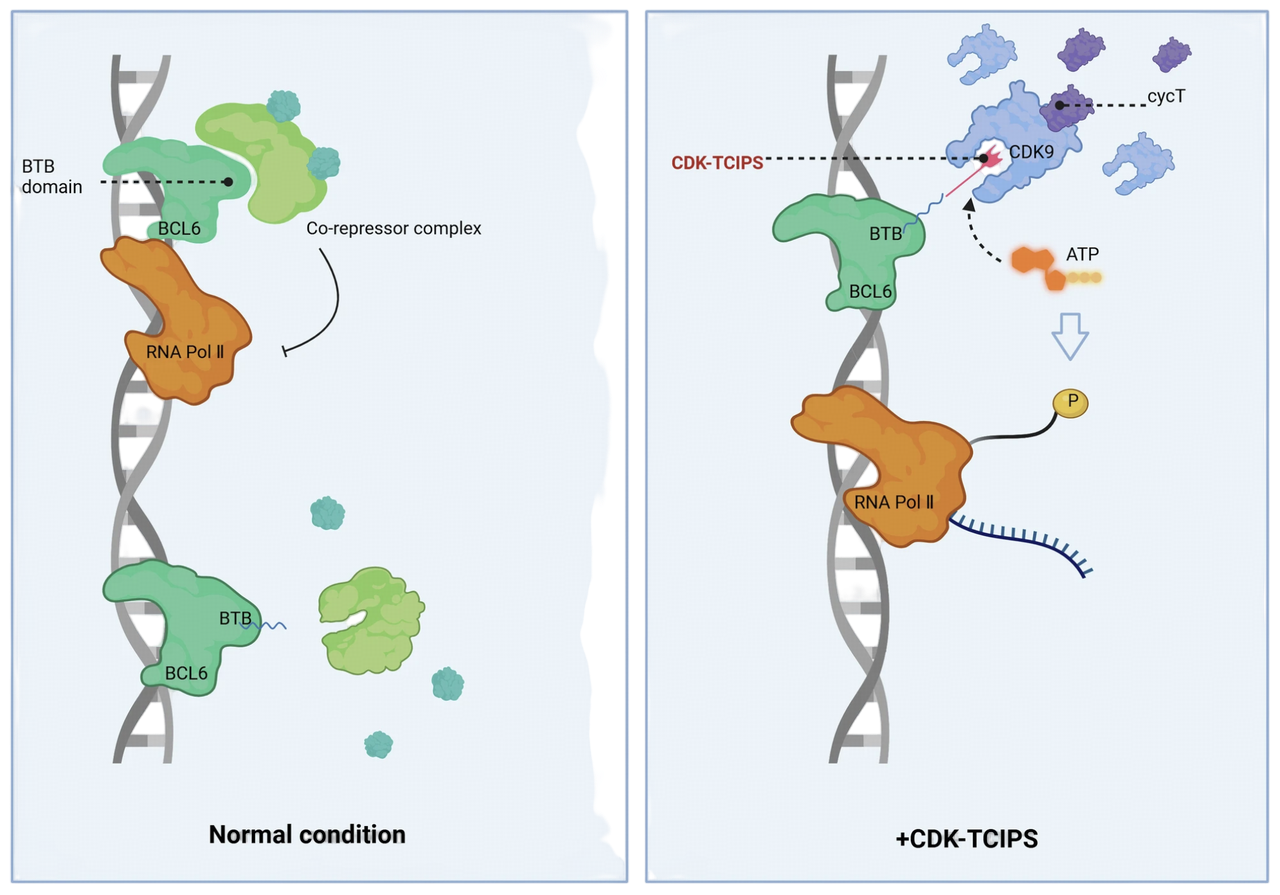
Variations broaden the toolkit: CDK-TCIPs redirect CDK9’s catalytic activity to drive pro-apoptotic transcription; KAT-TCIPs recruit the acetyltransferases p300/CBP; DNA-damage CIPs and a mutant-p53 activator (TRAP-1) extend the “gain-of-function” principle further.[18,19] Early activity has been reported in primary chronic lymphocytic leukemia cells and in cell lines.[22] The strategy is conceptually adjacent to RIPTACs — both co-opt an endogenous protein for a neomorphic, lethal purpose in the diseased cell — but TCIPs act at the level of transcription and remain entirely preclinical, with the safety of activating a pan-essential coactivator the central open question.[18]
6. The Broader Toolbox:L Beyond CRBN, VHL and the Proteasome
The induced-proximity concept generalizes to any endogenous machinery that can be recruited. Several branches matter for a complete picture: [1,2,4]
LYTACs (lysosome-targeting chimeras). Antibody- or glycopeptide-based agents that link extracellular and membrane proteins to lysosome-shuttling receptors — the broadly expressed CI-M6PR, or the hepatocyte-restricted ASGPR, whose tissue distribution sets the reach of each agent — giving access to the secreted and cell-surface targets that intracellular degraders cannot engage.[20]
AUTACs / AUTOTACs / ATTECs. Route cargo, including aggregates and organelles, to autophagy rather than the proteasome; useful when ubiquitin-proteasome capacity is limiting.[4]
RIBOTACs. Recruit the latent endogenous ribonuclease RNase L, which must dimerize to become active, to structured RNA targets, extending degradation to the transcriptome.[4]
DUBTACs. Invert degradation entirely — recruit a deubiquitinase to strip the degradation tag and stabilize a protein, rescuing loss-of-function disease (proof of concept: OTUB1 recruitment stabilizing ΔF508-CFTR; and selective BRD7-over-BRD9 stabilization).[2,21]
Membrane-E3 chimeras (AbTACs, PROTABs). Bispecific antibodies that recruit transmembrane E3 ligases like RNF43 and ZNRF3 to cell-surface targets, driving ubiquitination, internalization and lysosomal degradation of PD-L1, EGFR, IGF1R, HER2 and FZD5. Mechanistically distinct from LYTACs: an E3 at the membrane rather than a lysosomal sorting receptor.[38,39]
Recycling-receptor chimeras (KineTACs, TransTACs). Bispecifics that hijack widely expressed recycling receptors — CXCR7 via a CXCL12 arm, or transferrin receptor TfR1 — to drag surface and secreted proteins into the lysosome. These address the tissue-reach problem that constrains ASGPR-based LYTACs, and the KineTAC scaffold has now been extended to dozens of cytokine and growth-factor arms with distinct cell-type expression profiles.[40,41,43]
SNIPERs. IAP-recruiting degraders (cIAP1, cIAP2, XIAP), a third E3 family alongside CRBN and VHL, offering parallel degradation routes at the cost of more complex warheads and less well-mapped target scope.[42]
Phosphorylation / phosphatase chimeras (PHICs, PhosTACs, PHORCs). Recruit a kinase or phosphatase to write or erase a phosphosite, modulating signaling without destroying the protein, the clearest demonstration that induced proximity is not synonymous with degradation.[36]
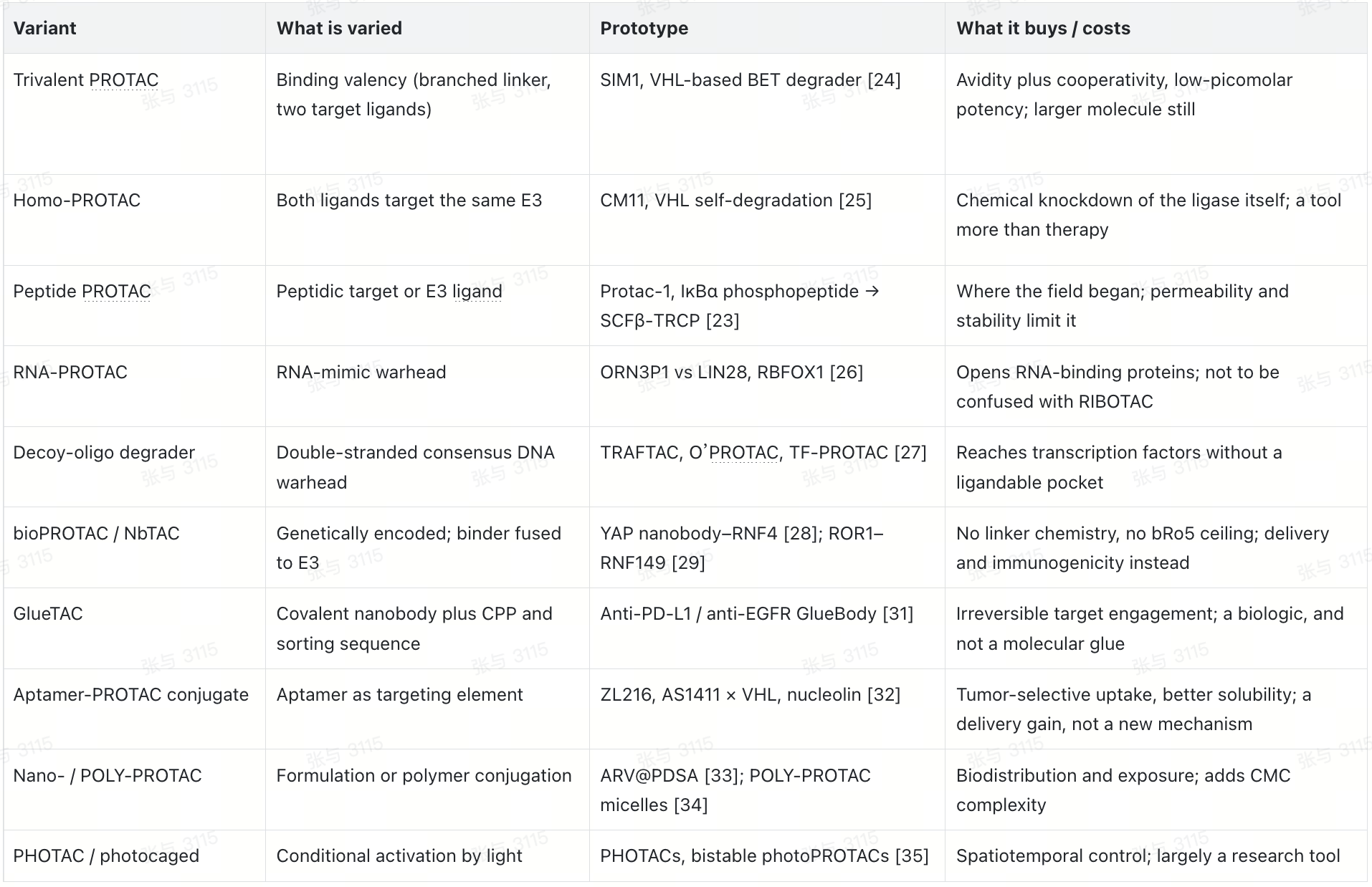
Table 1 catalogs the other variants. Most remain research tools; none has yet reached the clinic in the way the parent modality has.
7. Cross-Modality Comparison
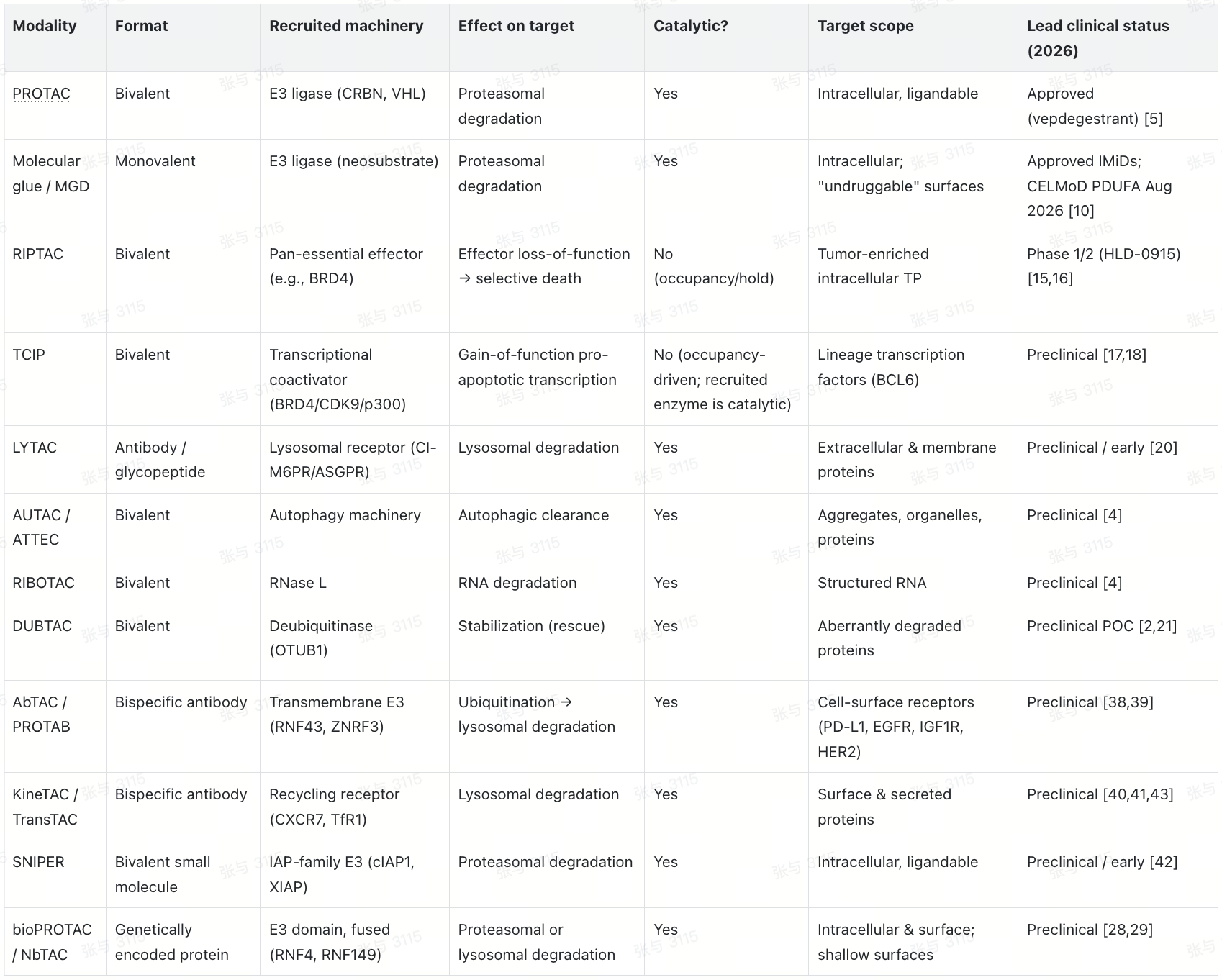
Table 2 places the modalities side by side. The through-line is that all exploit induced proximity, but they differ in what they recruit, what happens to the target, whether the action is catalytic, and how mature clinical evidence is.
8. How Each Modality Wins and Loses
Selectivity and resistance behavior are where the modalities diverge most sharply. Degraders (PROTACs, glues) win by removing a protein outright, which can defeat resistance mutations that merely blunt an inhibitor. Vepdegestrant’s ESR1-mutant benefit is the clinical illustration, with the caveat that its comparator was itself a degrader. However, they are vulnerable to loss or mutation of the recruited E3 ligase and its supporting machinery (CRBN loss and disruption of cullin neddylation are the best-documented routes), reduced ubiquitin–proteasome capacity, and the PROTAC hook effect. [1,6]
RIPTACs win by tying efficacy to differential expression; strikingly, the AR amplification and overexpression that accompany resistance to AR pathway inhibitors increase the abundance of full-length receptor and therefore feed the drug. This holds only for full-length AR: HLD-0915 and related RIPTACs engage the AR ligand-binding domain, which truncated splice variants such as AR-V7 lack, so variant-driven resistance escapes the drug rather than feeding it. The exposure is therefore to falling full-length TP abundance (a variant-only, FL-AR-negative tumor is a genuine escape route) and to therapeutic-index erosion if the TP is expressed even modestly in normal tissue.[15]
TCIPs win by co-opting a lineage-defining transcription factor to trigger apoptosis, giving cell-type selectivity, but inherit the safety risk of activating pan-essential coactivators and depleting normal cells that share the lineage marker (e.g., germinal-center B cells for BCL6).[18] The overarching theme is that selectivity is bought somewhere specific, from catalysis, expression, and transcriptional context, with each purchase carrying its own failure mode.
9. Developability and Landscape
Chemistry sets the practical ceiling. Bivalent degraders and RIPTACs are beyond-Rule-of-5 molecules whose oral exposure, solubility and linker design dominate development; monovalent glues are smaller and more tractable but harder to discover rationally; antibody-based LYTACs trade small-molecule convenience for biologic manufacturing. Linker class (rigid, flexible, cleavable, macrocyclic, polarity-masking) materially shapes ternary-complex geometry, potency and pharmacokinetics.
2026 is a commercial inflection point. PROTACs crossed the approval line (vepdegestrant), validating designed heterobifunctional degradation in the clinic; molecular glues have their next generation at the regulatory door (iberdomide PDUFA August 17, 2026), building on two decades of approved IMiDs, with a deep CELMoD franchise and active big-pharma dealmaking (Novartis–Monte Rosa, Roche–C4); RIPTACs attracted a ~US$3.05B acquisition (Johnson & Johnson/Halda) on an early Phase 1 dataset; and TCIPs and the wider TAC family remain preclinical but conceptually fertile. The field now spans a full maturity ladder within one paradigm.
References
[1] King EA,, et al. Induced proximity-based therapeutic modalities. Nat Rev Drug Discov. 2026;25:175–203. doi:10.1038/s41573-025-01316-z. https://www.nature.com/articles/s41573-025-01316-z
[2] Proximity-Based Modalities for Biology and Medicine (Outlook; acronym landscape and DUBTAC proof of concept). ACS Cent Sci. 2023;9(7):1269–1284. https://pubs.acs.org/acscii/article/9/7/1269/1261387/Proximity-Based-Modalities-for-Biology-and
[3] The Matchmaker Modality: Engineering Event-Driven Pharmacology With Induced Proximity (Feature). Drug Discovery Online, 2026. https://www.drugdiscoveryonline.com/doc/the-matchmaker-modality-engineering-event-driven-pharmacology-with-induced-proximity-0001
[4] Rizehbandi M, et al. Induced-proximity therapeutics for targeted protein and RNA degradation: an organic-chemistry perspective (Review). Curr Res Struct Biol. 2026;11:100181. doi:10.1016/j.crstbi.2026.100181. https://www.sciencedirect.com/science/article/pii/S2665928X26000024
[5] Arvinas. FDA Approval of VEPPANU (vepdegestrant) for ESR1m, ER+/HER2- advanced breast cancer — the first-and-only FDA-approved PROTAC. 1 May 2026. https://ir.arvinas.com/news-releases/news-release-details/arvinas-announces-fda-approval-veppanu-vepdegestrant-treatment
[6] FDA Approves Vepdegestrant for ESR1-Mutated, ER+/HER2- Advanced Breast Cancer (with Guardant360 CDx companion diagnostic). AJMC, 2026. https://www.ajmc.com/view/fda-approves-vepdegestrant-for-esr1-mutated-er-positive-her2-negative-advanced-breast-cancer
[7] Arvinas, Inc. Form 10-Q, FY2026 (VEPPANU approval; $50M milestone; VERITAC-2 details). U.S. SEC. https://www.sec.gov/Archives/edgar/data/0001655759/000162828026033669/arvn-20260331.htm
[8] VERITAC-2: Phase 3 vepdegestrant (ARV-471) vs fulvestrant in ER+/HER2- advanced breast cancer. ClinicalTrials.gov NCT05654623. https://clinicaltrials.gov/study/NCT05654623
[9] Arvinas. Q1 2026 corporate update (pipeline: ARV-102 LRRK2 degrader in Parkinson’s; ARV-393 BCL6; ARV-6723 HPK1; pan-KRAS degrader). Form 8-K, U.S. SEC. https://www.sec.gov/Archives/edgar/data/0001655759/000162828026033875/q12026earningsrelease.htm
[10] Molecular Glue Degraders in Clinical Trials: 2026 Update (iberdomide NDA, PDUFA 17 Aug 2026; mezigdomide SUCCESSOR-2; golcadomide). Biopharma PEG, 2026. https://www.biochempeg.com/article/1467.html
[11] Five molecular glues that could stick — and the companies behind them (BMS CELMoDs; Monte Rosa MRT-6160/MRT-2359; C4 degrader-antibody conjugates). BioSpace, 2026. https://www.biospace.com/drug-development/5-molecular-glues-that-could-stick-and-the-companies-stuck-in
[12] Monte Rosa Therapeutics. Global license agreement with Novartis to advance VAV1-directed molecular glue degraders (MRT-6160). 28 Oct 2024. https://ir.monterosatx.com/news-releases/news-release-details/monte-rosa-therapeutics-announces-global-license-agreement/
[13] Słabicki M, et al. The CDK inhibitor CR8 acts as a molecular glue degrader that depletes cyclin K. Nature. 2020;585:293–297. https://doi.org/10.1038/s41586-020-2374-x
[14] Wen J, Yu J, Wen W, et al. Molecular Glue Degraders: Redefining Targeted Therapies From Discovery to Therapeutic Applications. MedComm–Oncology. 2026;5(1):e70058. doi:10.1002/mog2.70058 https://onlinelibrary.wiley.com/doi/10.1002/mog2.70058
[15] Raina K, et al. Regulated induced proximity targeting chimeras—RIPTACs. Cell Chem Biol. 2024;31(8):1490–1502.e42. doi:10.1016/j.chembiol.2024.07.005. [Series 1] https://pubmed.ncbi.nlm.nih.gov/39116881/
[16] U.S. Food and Drug Administration. https://www.fda.gov/drugs/resources-information-approved-drugs/fda-grants-accelerated-approval-iberdomide-daratumumab-and-hyaluronidase-fihj-and-dexamethasone
Bristol Myers Squibb. https://news.bms.com/news/corporate-financial/2026/U-S--Food-and-Drug-Administration-Accepts-Bristol-Myers-Squibbs-New-Drug-Application-for-Iberdomide-in-Patients-with-Relapsed-or-Refractory-Multiple-Myeloma/default.aspx
Lonial S, et al. EXCALIBER-RRMM: a phase III trial of iberdomide, daratumumab, and dexamethasone in relapsed/refractory multiple myeloma. Future Oncol. 2025 Jun;21(14):1761-1769. doi: 10.1080/14796694.2025.2501920. https://pubmed.ncbi.nlm.nih.gov/40346992/
[17] Gourisankar S, Krokhotin A, Ji W, et al. Rewiring cancer drivers to activate apoptosis (TCIP1; BCL6–BRD4). Nature. 2023;620(7973):417–425. doi:10.1038/s41586-023-06348-2. https://doi.org/10.1038/s41586-023-06348-2
[18] Chemical inducers of proximity: precision tools for apoptosis in transcriptional regulation (on Sarott et al., CDK-TCIPs, Science). Signal Transduct Target Ther. 2024. doi:10.1038/s41392-024-02089-4. https://www.nature.com/articles/s41392-024-02089-4; Sarott RC, Gourisankar S, Karim BA, et al. Relocalizing transcriptional kinases to activate apoptosis (CDK-TCIPs). Science. 2024;386(6717):eadl5361. doi:10.1126/science.adl5361. https://www.science.org/doi/10.1126/science.adl5361
[19] Qiu T, Lee YT, Dwyer BG, et al. Design and Development of DNA Damage Chemical Inducers of Proximity for Targeted Cancer Therapy. J Am Chem Soc. 2026;148(1):1153–1163. doi:10.1021/jacs.5c17396. https://pubs.acs.org/doi/10.1021/jacs.5c17396
Scheufele F, et al. A bivalent molecular glue linking lysine acetyltransferases to oncogene-induced cell death (KAT-TCIPs; TCIP3, p300/CBP × BCL6). Cell. 2026; in press (PII S0092-8674(26)00757-9). Preprint: bioRxiv 2025.03.14.643404. https://www.cell.com/cell/abstract/S0092-8674(26)00757-9
[20] Banik SM, et al. Lysosome-targeting chimaeras (LYTACs) for degradation of extracellular proteins. Nature. 2020;584:291–297. doi:10.1038/s41586-020-2545-9. https://doi.org/10.1038/s41586-020-2545-9
[21] Foghorn Therapeutics. Induced-proximity platform: DUBTAC proof of concept (selective BRD7 stabilization). Form 8-K, U.S. SEC, 2025. https://www.sec.gov/Archives/edgar/data/1822462/000162828025014475/a2025-03x24foghorncorpor.htm
[22] Rewiring Cancer Drivers to Induce Apoptosis by Transcriptional Chemical Inducers of Proximity in Chronic Lymphocytic Leukemia. Blood. 2024;144(Suppl 1):4606. doi:10.1182/blood-2024-203582. https://ashpublications.org/blood/article/144/Supplement%201/4606/529305/Rewiring-Cancer-Drivers-to-Induce-Apoptosis-By
[23] Sakamoto KM, Kim KB, Kumagai A, Mercurio F, Crews CM, Deshaies RJ. Protacs: chimeric molecules that target proteins to the Skp1–Cullin–F box complex for ubiquitination and degradation (the first, peptidic PROTAC). Proc Natl Acad Sci USA. 2001;98(15):8554–8559. doi:10.1073/pnas.141230798. https://www.pnas.org/doi/10.1073/pnas.141230798
[24] Imaide S, Riching KM, Makukhin N, et al., Ciulli A. Trivalent PROTACs enhance protein degradation via combined avidity and cooperativity. Nat Chem Biol. 2021;17(11):1157–1167. doi:10.1038/s41589-021-00878-4. https://www.nature.com/articles/s41589-021-00878-4
[25] Maniaci C, Hughes SJ, Testa A, et al., Ciulli A. Homo-PROTACs: bivalent small-molecule dimerizers of the VHL E3 ubiquitin ligase to induce self-degradation. Nat Commun. 2017;8:830. doi:10.1038/s41467-017-00954-1. https://www.ncbi.nlm.nih.gov/pmc/articles/PMC5635026/
[26] Ghidini A, Cléry A, Halloy F, Allain FHT, Hall J. RNA-PROTACs: degraders of RNA-binding proteins (LIN28, RBFOX1). Angew Chem Int Ed. 2021;60(6):3163–3169. doi:10.1002/anie.202012330. https://onlinelibrary.wiley.com/doi/abs/10.1002/anie.202012330
[27] Current status of oligonucleotide-based protein degraders (TRAFTAC, OligoTRAFTAC, O’PROTAC, TF-PROTAC). Review, 2023. https://pmc.ncbi.nlm.nih.gov/articles/PMC10055846/
[28] Zhou R, Wang H, Zhang GM, et al. Targeted degradation of endogenous YAP by nanobody bioPROTAC inhibits tumor progression. Nat Commun. 2025;16:9374. doi:10.1038/s41467-025-64426-7. https://www.nature.com/articles/s41467-025-64426-7
[29] Development of nanobody-based PROTAC (NbTAC) for ROR1 degradation by RNF149. Int J Biol Macromol. 2025. https://www.sciencedirect.com/science/article/abs/pii/S0141813025062555
[30] Targeting intracellular cancer proteins with tumour-microenvironment-responsive bispecific nanobody-PROTACs (BumPeD; furin-cleavable, degron-based). 2025. https://www.ncbi.nlm.nih.gov/pmc/articles/PMC11742431/
[31] Zhang H, Han Y, Yang Y, et al., Chen PR. Covalently engineered nanobody chimeras for targeted membrane protein degradation (GlueTAC; PD-L1, EGFR). J Am Chem Soc. 2021;143(40):16377–16382. doi:10.1021/jacs.1c08521. https://pubs.acs.org/doi/abs/10.1021/jacs.1c08521
[32] Development of a novel PROTAC using the nucleic acid aptamer as a targeting ligand for tumour-selective degradation of nucleolin (ZL216; AS1411 × VHL). Mol Ther Nucleic Acids. 2022;30. https://www.sciencedirect.com/science/article/pii/S2162253122002517
[33] Glutathione-scavenging nanoparticle-mediated PROTAC delivery for targeted protein degradation (Nano-PROTACs; ARV@PDSA, BRD4). https://www.ncbi.nlm.nih.gov/pmc/articles/PMC10238184/
[34] Engineered bioorthogonal POLY-PROTAC nanoparticles for tumour-specific protein degradation. https://www.ncbi.nlm.nih.gov/pmc/articles/PMC9325692/
[35] Khan S, He Y, Zhang X, et al. PROteolysis TArgeting Chimeras (PROTACs) as emerging anticancer therapeutics. Oncogene. 2020;39(26):4909–4924. doi:10.1038/s41388-020-1336-y. (Collates PHOTACs, Sci Adv 2020;6:eaay5064; photocaged PROTACs, JACS 2019;141:18370; bistable photoPROTACs, ACS Cent Sci 2019;5:1682.) https://www.nature.com/articles/s41388-020-1336-y
[36] Bifunctional proximity-inducing strategies for targeted and programmable post-translational modifications (review; DEPTACs, BI-TACs, BacTACs, meTPD). Adv Drug Deliv Rev. 2026. https://www.sciencedirect.com/science/article/abs/pii/S0169409X26001080
[37] Nalawansha DA, et al. TAC-tics for leveraging proximity biology in drug discovery (review of the acronym landscape). ChemBioChem. 2024. doi:10.1002/cbic.202300712. https://chemistry-europe.onlinelibrary.wiley.com/doi/10.1002/cbic.202300712
[38] Cotton AD, Nguyen DP, Gramespacher JA, Seiple IB, Wells JA. Development of antibody-based PROTACs (AbTACs) for the degradation of the cell-surface immune checkpoint protein PD-L1 via RNF43. J Am Chem Soc. 2021;143:593–598. doi:10.1021/jacs.0c10008. https://pubs.acs.org/doi/10.1021/jacs.0c10008
[39] Marei H, Tsai WK, Kee YS, et al. Antibody targeting of E3 ubiquitin ligases for receptor degradation (PROTABs; ZNRF3/RNF43, IGF1R, HER2, FZD5). Nature. 2022;610:182–189. doi:10.1038/s41586-022-05235-6. https://doi.org/10.1038/s41586-022-05235-6
[40] Pance K, Gramespacher JA, Byrnes JR, et al., Wells JA. Modular cytokine receptor-targeting chimeras for targeted degradation of cell surface and extracellular proteins (KineTACs). Nat Biotechnol. 2023;41:273–281. doi:10.1038/s41587-022-01456-2. https://www.nature.com/articles/s41587-022-01456-2
[41] Zhang D, Duque-Jimenez J, Facchinetti F, et al. Transferrin receptor targeting chimeras for membrane protein degradation (TransTACs). Nature. 2025;638:787–795. doi:10.1038/s41586-024-07947-3. https://www.nature.com/articles/s41586-024-07947-3
[42] Recent advances in IAP-based PROTACs (SNIPERs) as potential therapeutic agents (review; cIAP1, XIAP). https://www.ncbi.nlm.nih.gov/pmc/articles/PMC9122363/
[43] Kumru K, Yao Z, Holmes BB, et al., Wells JA. A cytokine receptor–targeting chimera toolbox for expanding extracellular targeted protein degradation. Proc Natl Acad Sci USA. 2026;123(4):e2524129123. https://www.pnas.org/doi/10.1073/pnas.2524129123
[44] Annunziato S. et al., "Cereblon induces G3BP2 neosubstrate degradation using molecular surface mimicry," Nat. Struct. Mol. Biol. 33, 479–487 (2026) doi:10.1038/s41594-025-01738-8. https://www.nature.com/articles/s41594-025-01738-8
[45] Ojeda S. et al., "Degron-independent recruitment of KAT2A expands the target space of CRBN molecular glues," Science 393, 188–194 (2026), 10.1126/science.aef5391. https://www.science.org/doi/10.1126/science.aef5391
[46] Discovery of daraxonrasib, J. Med. Chem. 2025; ternary structure PDB 9BG6 — full citation: Cregg J, Edwards AV, Chang S, et al. J Med Chem. 2025;68(6):6064–6083. doi:10.1021/acs.jmedchem.4c02314. https://pubs.acs.org/doi/abs/10.1021/acs.jmedchem.4c02314 https://www.rcsb.org/structure/9BG6
[47] O'Reilly EM, Wainberg ZA, Hendifar AE et al., N. Engl. J. Med. 395:325–337 (2026); ASCO 2026 LBA5 doi:10.1056/NEJMoa2605555. https://www.nejm.org/doi/full/10.1056/NEJMoa2605555
[48] Sang B, Ye LF, Fu Z, et al. Disrupted molecular glue complex drives RAS inhibitor resistance. Cell. 2026;189(10):2918–2933.e17. doi:10.1016/j.cell.2026.03.031. https://www.cell.com/cell/fulltext/S0092-8674(26)00332-6
[49] Petzold G, Gainza P, Annunziato S, et al., “Mining the CRBN target space redefines rules for molecular glue–induced neosubstrate recognition” (>1,600 predicted G-loop proteins; helical G-loop; VAV1 SH3c surface mimicry of GSPT1), Science 389, eadt6736 (2025), doi:10.1126/science.adt6736 https://www.science.org/doi/10.1126/science.adt6736
[50] Campone M, De Laurentiis M, Jhaveri K, et al., for the VERITAC-2 Study Group, “Vepdegestrant, a PROTAC estrogen receptor degrader, in advanced breast cancer,” N. Engl. J. Med. 393(6):556–568 (2025), doi:10.1056/NEJMoa2505725 (VERITAC-2 primary publication) https://www.nejm.org/doi/abs/10.1056/NEJMoa2505725
[51] Dimopoulos MA, et al., “Mezigdomide, carfilzomib, and dexamethasone versus carfilzomib and dexamethasone in relapsed or refractory multiple myeloma (SUCCESSOR-2): a phase 3, open-label, randomised controlled trial,” The Lancet 2026, doi:10.1016/S0140-6736(26)01088-3 https://www.thelancet.com/journals/lancet/article/PIIS0140-6736(26)01088-3/abstract
NEXT IN THIS SERIES | Part III | The Grammar of the Chimera: RIPTAC SAR & IP
Parts I and II established what RIPTACs are and where they sit among their neighbors. Part III turns to the chemistry. We will mine the published and pending RIPTAC patent literature for structure–activity relationships — target-ligand and effector-ligand scaffolds, linker length/rigidity/attachment geometry, physicochemical strategies for bRo5 oral exposure, and the composition-of-matter and method claims that define the field’s intellectual-property landscape — to map what actually makes a functional RIPTAC and where the whitespace is.

Our mission is to democratize computational drug discovery tools and empower researchers and organizations worldwide.