

Inside the Ring Series 7: Beyond Rule of Five for Macrocycles — A Full Breakdown
Intro to the breakdown
In 2023, Diego García Jiménez and colleagues published a landmark study in the Journal of Medicinal Chemistry titled "Macrocycles in Drug Discovery—Learning from the Past for the Future." The authors from Uppsala University analyzed 67 FDA-approved macrocyclic drugs, cross-referenced them against 34 macrocyclic compounds in U.S. clinical trials, synthesized insights from 509 research papers published since 2005, and pulled data from 28,052 macrocycles in the ChEMBL database. By mining this enormous dataset, they extracted the defining characteristics of what makes macrocyclic drugs successful, and more importantly, how they break the traditional rules of drug design.
Macrocycles, Not Just Cyclic Peptides
Until now, this entire Inside the Ring series has been specifically focused on cyclic peptides molecules built from amino acids stitched together in rings. But the thing is, a ring structure doesn't have to be made of amide bonds. In fact, it doesn't have to be biological at all. Consider 18-crown-6, one of the most common reagents in organic chemistry labs. It's a macrocycle with a ring of oxygen atoms that acts as a phase-transfer catalyst, helping dissolve ionic compounds in nonpolar solvents. Or think about the terpenoids found in plants and foods we consume daily, many of which are macrocycles built by nature over millions of years of evolution.
Then there's plerixafor, the first de novo macrocyclic drug approved by the FDA in 2008. It's nothing like a peptide. Yet it's undeniably a macrocycle. The definition is surprisingly simple: macrocycles are organic molecules containing at least 12 heavy atoms in a ring structure. That's it. No restriction on the kinds of atoms or biological origins. So think outside of amino acid building blocks for a while — the ring is what matters.

Beyond Rule of Five (bRO5)
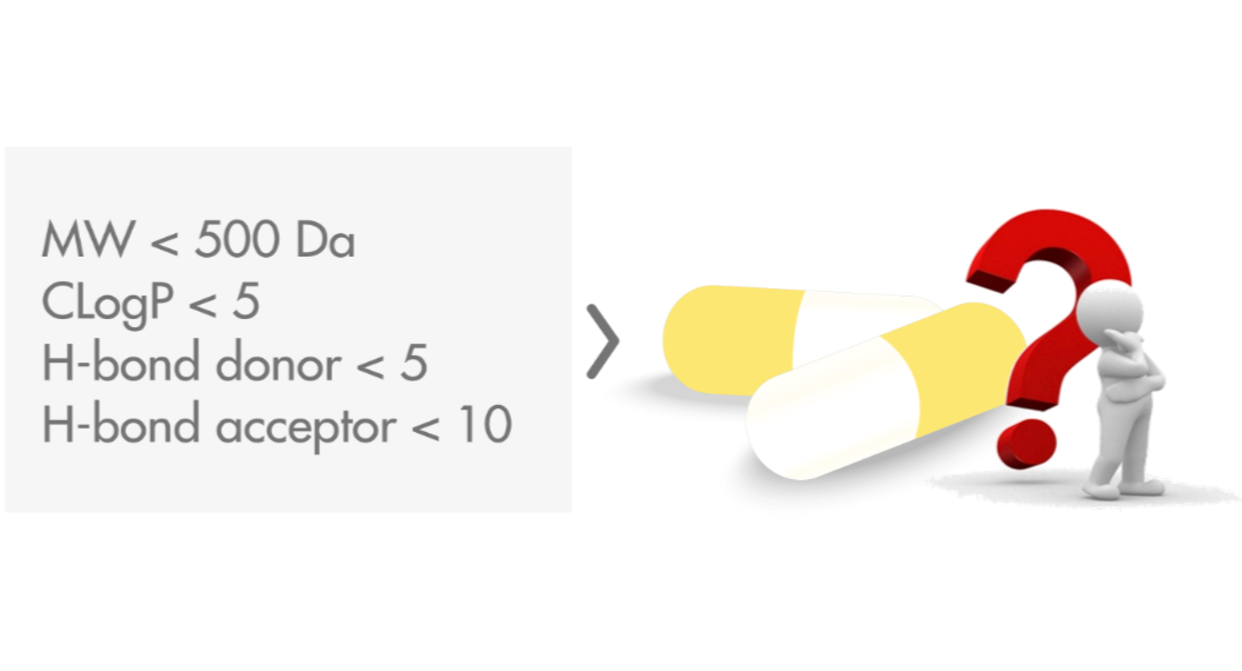
The earlier articles in this series presented the central challenge of modern drug discovery: we want pills, not needles. We want molecules that can survive the hostile environment of the gastrointestinal tract, permeate across cell membranes, navigate the bloodstream, and find their targets with precision. Accomplishing all of this is an enormous ask. Enter Lipinski's Rule of Five, the golden standard that has guided small-molecule drug design for decades. The rule simply states that orally active drugs meet at least three of these criteria:
- No more than 5 hydrogen bond donors
- No more than 10 hydrogen bond acceptors
- Molecular mass less than 500 daltons
- Calculated octanol-water partition coefficient (LogP) not exceeding 5
For decades, this worked for small molecules. They dominated drug discovery because they ware reliable and well-understood. But small molecules have limits: they struggle with flat protein-protein interfaces, and are often too small to engage with complex, extended binding sites. Enter the new modalities: peptides (linear and cyclic), PROTACs, antibody-drug conjugates, and more. These molecules are bigger, more complex, geometrically intricate, and often violate Rule of Five dramatically. Yet they work.
The molecules that break the rules are now saving lives (in fact, around 50% of approved drugs do not meet all rule of 5). But rather than breaking the rules randomly, they're following a different set of rules that we're only now beginning to decode. That's where the the paper comes in. By analyzing thousands of macrocyclic drugs and compounds, the authors didn't just identify patterns, but extracted the new principles that govern success in the beyond-Rule-of-Five space.
What FDA-Approved Macrocycles Reveal
The Landscape: 67 Stories
As of 2022, the U.S. FDA had approved 67 macrocyclic drugs, with at least one approval arriving nearly every year since 1990. But despite their remarkable ability to modulate "undruggable" targets, macrocycles represent only 4% of all FDA-approved small-molecule drugs. There's enormous untapped potential. Of these 67 drugs, a clear divide emerges: 26 (39%) are taken orally, while 41 are administered by injection. This ratio has remained remarkably stable over time, a hint that designing truly orally bioavailable macrocycles remains a persistent challenge.
Perhaps the most revealing fact is that 88% are natural products or their derivatives. The first designed macrocyclic drug plerixafor wasn't approved until 2008. For over 50 years ( from 1940), we relied on nature's macrocycles, optimized by evolution for biological activity. Only recently have we begun systematically designing them from scratch.
Macrocycles Specialize in "Undruggable" Targets
Macrocyclization is a strategy born from frustration. Flat protein surfaces (shallow, surface-level binding site that is broad and exposed to the solvent), groove-shaped binding sites (elongated indentation on the surface of a protein), tunnel-like interfaces (deep, enclosed, and often narrow channel) are the targets that small molecules struggle against. Linear molecules, with their flexible backbones, often can't achieve the precise spatial positioning needed to engage these surfaces. Macrocycles, by contrast, are preorganized rings. Their structural rigidity locks them into defined conformations and enables them to fit snugly into binding sites that would reject a flexible competitor.
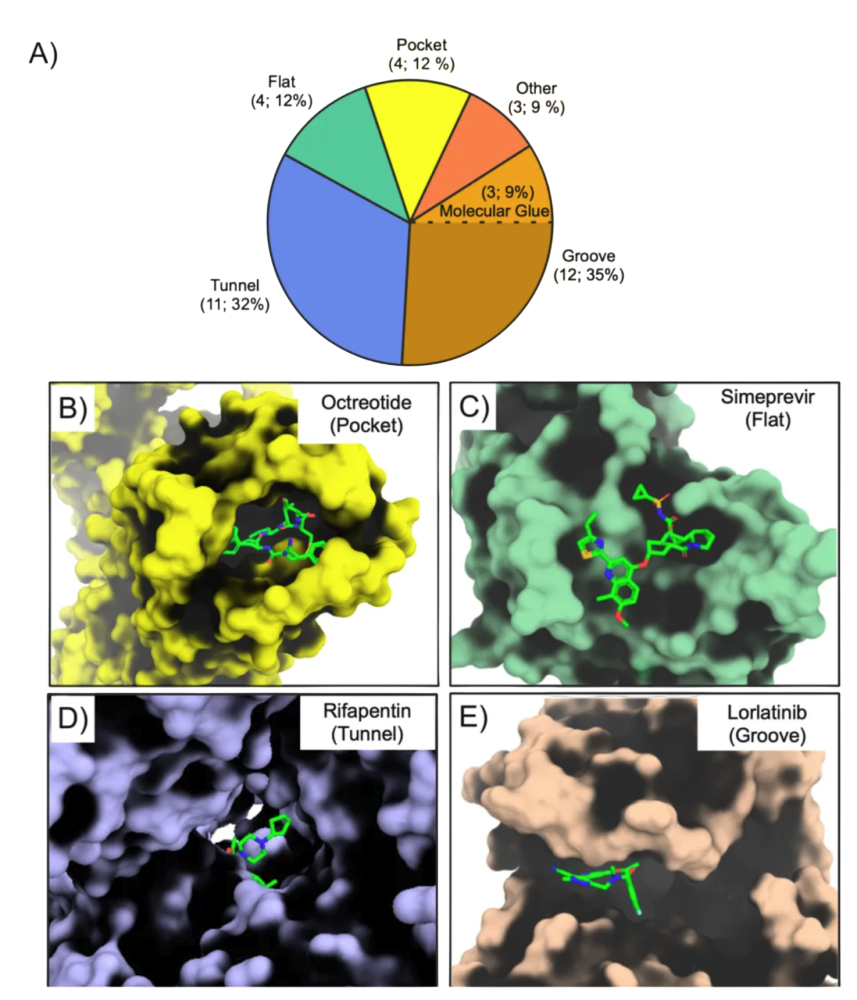
When researchers searched the Protein Data Bank for structural complexes of FDA-approved macrocyclic drugs with their targets, they found compelling evidence of this advantage:
- 27 out of 34 drugs (79%) bind to "undruggable" sites (flat, groove-shaped, or tunnel-like binding pockets)
- Only 4 (12%) bind to typical pocket-like sites (the kind small molecules prefer)
- 3 (9%) act through mechanisms that don't involve a defined binding site
This isn't coincidence. Macrocycles were specifically chosen because they could do what small molecules couldn't.
The Natural Product Advantage and Limitations
Of the 67 FDA-approved macrocycles, 59 are natural products or derivatives. This dominance tells an important story: nature has spent billions of years optimizing macrocyclic structures for biological potency, metabolic stability, and in vivo efficacy. We've been smart to learn from it.
But here's the catch: natural products came pre-packaged with trade-offs. Many have poor oral bioavailability, rapid clearance, or limited specificity. The 34 natural product derivatives in the FDA-approved set represent years of medicinal chemistry optimization: adjusting pharmacokinetics (improving oral bioavailability, half-life, stability, resistance to enzymatic degradation, solubility) and pharmacodynamics (enhancing potency, expanding activity spectrum, reducing side effects).
The fact that despite decades of optimization, only 39% of approved macrocycles are orally available underscores a critical challenge: making macrocycles swallowable is hard.
Indications: Where Macrocycles Matter Most
The therapeutic applications reveal where macrocycles shine. As of 2022:
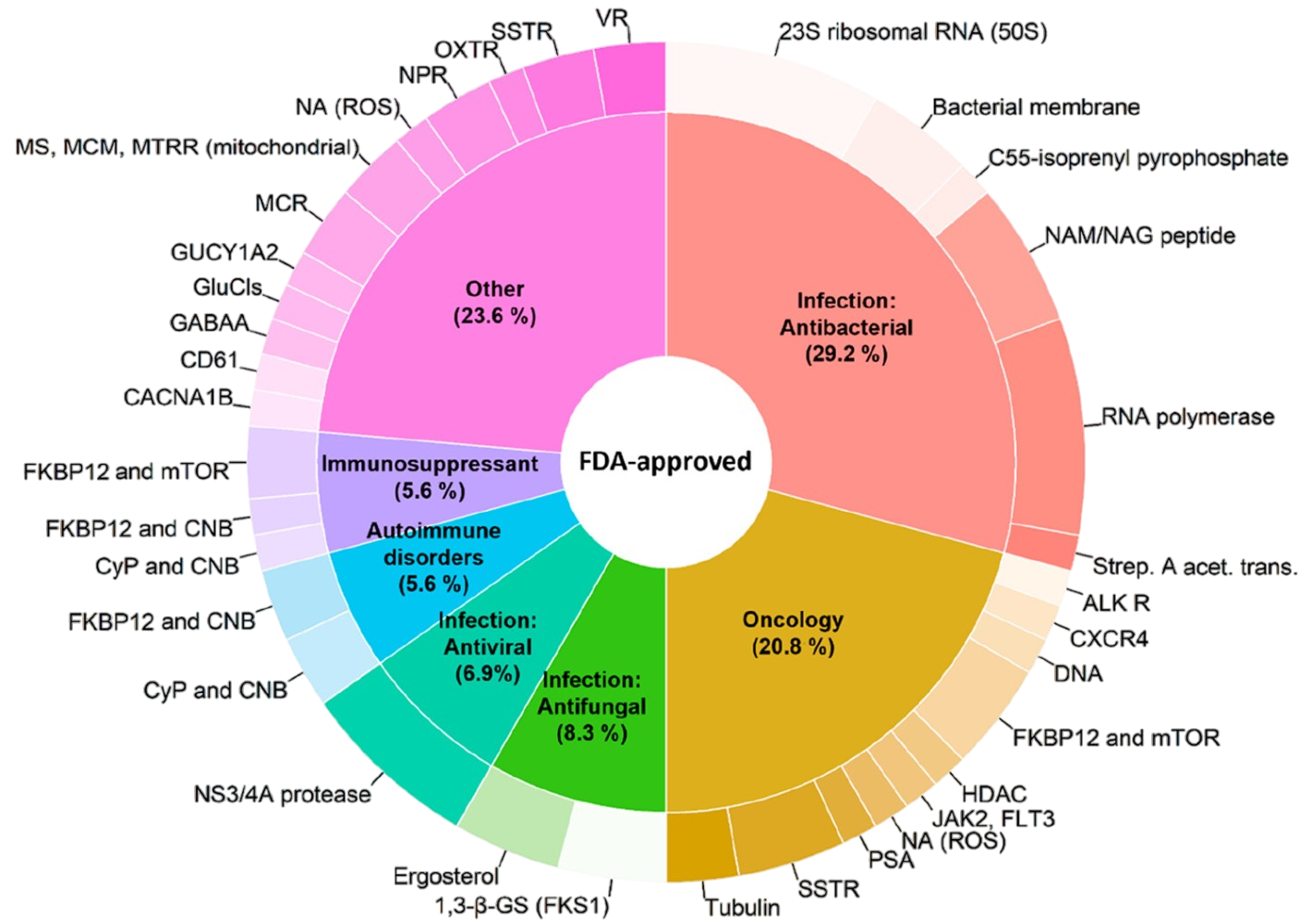
- Infectious diseases dominate (44.4%), with antibacterials accounting for 29.2% and antivirals and antifungals making up most of the rest
- Oncology follows closely (20.8%), with approvals accelerating significantly since 2007
- Autoimmune and immunosuppressive indications (5.6% each) round out major categories
- An additional 23.6% addresses diverse conditions: chronic pain, heart failure, genetic obesity
The pattern is clear: macrocycles excel where specificity, potency against difficult targets, and complex mechanisms matter most. They're the tool you reach for when conventional approaches have failed.
NEW RULES Decoding the bRO5 Space
The Chemical Space: Oral vs. Injected
Things are about to get quantitative. The García Jiménez paper calculated 10 molecular descriptors for all 67 macrocyclic drugs:
- Size-related (2): molecular weight (MW), carbon atom count
- Lipophilicity-related (2): octanol-water partition coefficient (cLogP), aromatic ring count
- Polarity-related (3): topological polar surface area (TPSA), hydrogen bond donors (HBD), hydrogen bond acceptors (HBA)
- Flexibility-related (2): rotatable bond count, Kier flexibility index
- Solubility-related (1): calculated solubility (cLogS)
When they plotted these descriptors, a striking pattern emerged: orally administered macrocycles occupied a distinctly different chemical space than injected drugs.
Orally available compounds showed lower molecular weight, higher lipophilicity (cLogP), lower polarity (TPSA, HBA, HBD), and lower flexibility (fewer rotatable bonds). While these features make intuitive sense in that they balance the lipophilicity and polarity needed to permeate membranes without sacrificing solubility, most oral macrocycles still fall in the beyond-Rule-of-Five (bRO5) space. They violate traditional small-molecule design principles yet still work.
How? The answer lies in a phenomenon called the "molecular chameleon" hypothesis, where macrocycles dynamically adapt their conformations in response to their environment. The most famous example is cyclosporin, which exhibits highly variable but surprisingly good oral bioavailability (up to 60%) despite violating Rule of Five. Other approved macrocycles including roxithromycin, telithromycin, spiramycin, simeprevir show similar behavior.
The Practical Rule: HBD ≤ 7
Here's where the paper delivers actionable guidance. After analyzing all 67 drugs, the researchers identified which molecular descriptors best predicted oral bioavailability. They then defined "crossover points", thresholds where oral and injectable drugs separated most cleanly. The results were striking: hydrogen bond donors (HBD) and topological polar surface area (TPSA) emerged as the best predictors of oral bioavailability.
- HBD thresholds achieved 88% sensitivity and 71% specificity
- TPSA thresholds achieved 92% sensitivity and 66% specificity
But single descriptors weren't enough. When the researchers combined HBD with other molecular properties (MW, cLogP, or TPSA), they achieved better specificity for distinguishing oral from injectable drugs — 83–92% sensitivity and 74–79% specificity.
A simple, easy-to-remember guideline emerged. First you'd better have HBD ≤ 7 and meeting at lease one of:
- MW < 1000 Da
- cLogP > 2.5
- TPSA < 300 Å^2
Beyond these ranges, the likelihood of discovering oral macrocycles drops sharply.
Why HBD Matters: Natural Products vs. De Novo Design
Not all hydrogen bond donors are created equal. When the researchers subdivided oral macrocycles by their origin, natural product derivatives versus de novo designs, they discovered a critical insight: De novo designed macrocycles typically contain only 1–2 HBDs, almost exclusively from amide bonds (the backbone). On the other hand, natural product-derived macrocycles contain significantly more HBDs, mostly from phenolic and aliphatic hydroxyl groups.
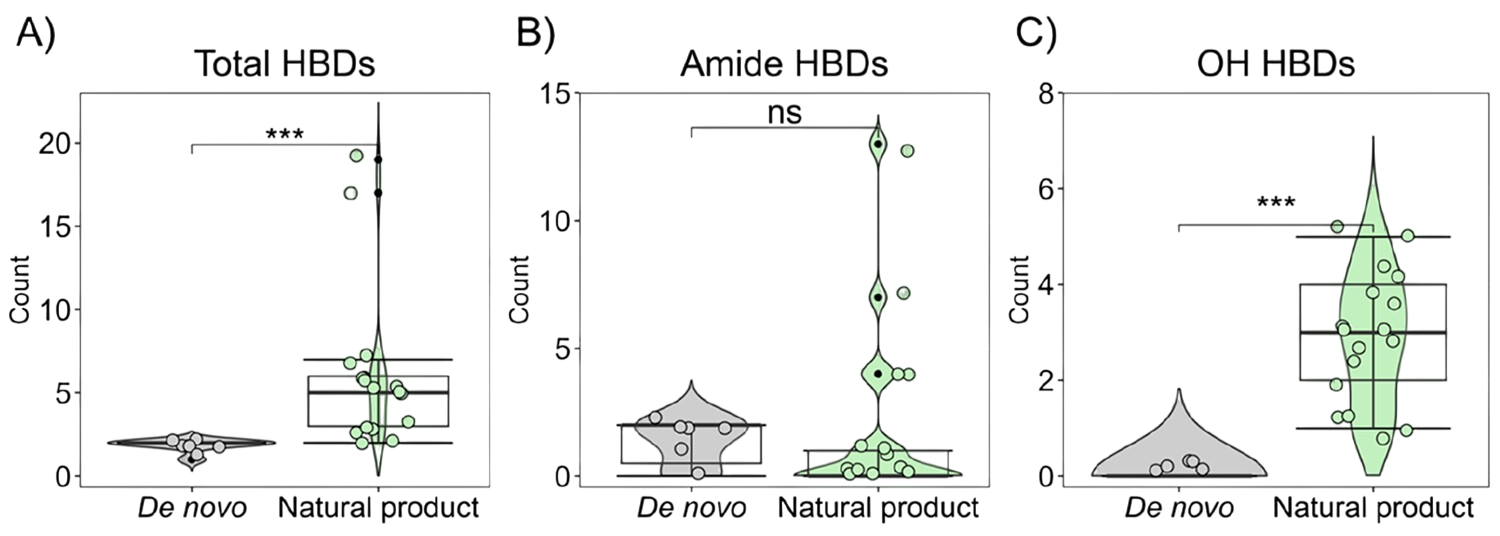
Yet how can both can achieve oral bioavailability?
The answer involves intramolecular hydrogen bonding. In de novo macrocycles, the limited number of amide HBDs allows them to form internal hydrogen bonds with the macrocyclic ring itself, masking their polarity and reducing water solubility requirements. This works beautifully but only when HBD count stays low (≤2 for amide-derived HBDs). In natural products, the situation is more complex. Their many hydroxyl groups can also form intramolecular hydrogen bonds, but they seem to have evolved a different set of mechanisms, possibly involving the "molecular chameleon" behavior observed in cyclosporin and voclosporin.
The practical takeaway for medicinal chemists: If you're designing a macrocycle de novo, keep amide-type HBDs to ≤2. Be particularly cautious with amide, sulfonamide, and related functionalities. Natural products have more flexibility here, but that flexibility often comes from decades of evolution, something de novo designs can't match quickly.
Four Regions of Oral Macrocyclic Space
When the researchers performed principal component analysis on the oral macrocycles, they discovered something unexpected: these 26 drugs didn't cluster in a single region. Instead, they occupied four distinct sub-regions of chemical space. Below is a very short explanation of how to read the next PCA figure (skip if you know the details):
PCA is a way to simplify complex data so we can see patterns. Each molecule has 10 properties as we just mentioned above. It’s hard to compare them all at once because that’s too many dimensions. PCA combines all those features into just two main directions (PC1 and PC2) that capture most of the differences between molecules.
How to read this plot:
- Each dot represents one molecule.
- The closer two dots are, the more similar the molecules are in their overall properties.
- The arrows show what kind of properties push molecules in each direction (for example, molecules goes further to the right top corner direction have higher molecular weight or more hydrogen bond acceptors).
- The blue and yellow dots are orally and parenterally administrated compounds being compared.
- The numbers (1–7) are specific examples shown around the plot (like Lorlatinib, Octreotide, Cyclosporin, etc.).
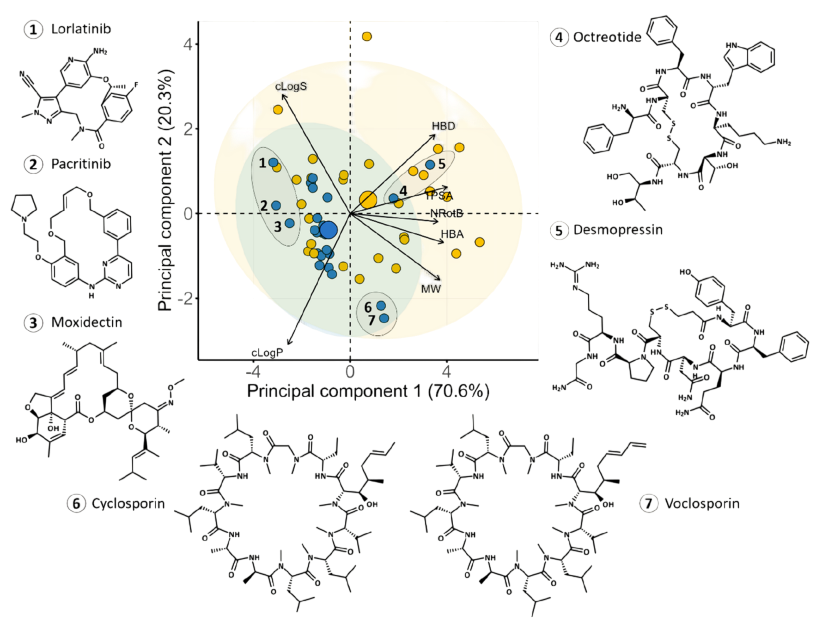
Region 1: The Main Cluster: Most oral macrocycles cluster near the center of orally bioavailable space (gathered blue dots), the "safe zone" where the combined properties align well with oral absorption.
Region 2: The Ro5-Compliant Outliers: Lorlatinib, pacritinib, and moxidectin (1, 2,3) show lower MW, lipophilicity, HBA, and rotatable bonds. Remarkably, they actually comply with Rule of Five. Lorlatinib even demonstrates clinical utility in treating brain metastases of cancer, suggesting that Rule of Five compliance, while not necessary for macrocycles, can still be valuable (especially for CNS penetration!).
Region 3: The Molecular Chameleons: Cyclic peptide Cyclosporin and voclosporin (4,5) occupy a distinct region characterized by high MW, TPSA, HBA, and rotatable bonds. They're the exceptions that prove the rule: despite violating Rule of Five dramatically, they achieve oral bioavailability through the "molecular chameleon" mechanism, where HBDs participate in intramolecular hydrogen bonding.
Region 4: The High-Potency Outliers: Also cyclic peptides Desmopressin and octreotide (6,7) represent an extreme case. They show extremely high polarity, large MW, and many rotatable bonds. Their oral bioavailability is actually very low, yet they're still marketed orally. Why? Because their potency is so high that even poor bioavailability translates into therapeutic efficacy.
FUTURE DEVELOPMENT: Clinical Trials and Beyond
The Clinical Pipeline: Testing the Rules
To assess whether these bRO5 rules hold up in current drug discovery, the researchers examined 34 macrocyclic compounds in U.S. clinical trials in the year of 2022 (selected from 2017 onward to ensure data quality).
The picture is mixed:
Route of Administration
- 11 (32%) are oral, while 23 are injectable
- This is lower than the 39% oral rate in approved drugs
- However, many Phase I trials default to injection, so the true oral percentage may be underestimated
Origin of Candidates
- 28 (82%) derive from natural products, while only 6 (18%) are de novo designs
- This mirrors the 88% natural product rate in approved drugs
- De novo macrocyclic strategies have yet to make major clinical impact
Indications
- Oncology dominates (47.1%), with antibacterial agents accounting for 11.8%
- This represents a significant shift from the approved set, where infectious diseases led
- The trend suggests medicinal chemists are increasingly targeting "undruggable" oncology targets
Compared with approved drugs, oral clinical candidates cluster in a single region of chemical space rather than four. They're positioned closer to Rule of Five space than approved oral macrocycles. This suggests current pipeline drugs are slightly more "well-behaved" from a traditional drug-design perspective, but they may also be missing opportunities in deeper bRO5 space.
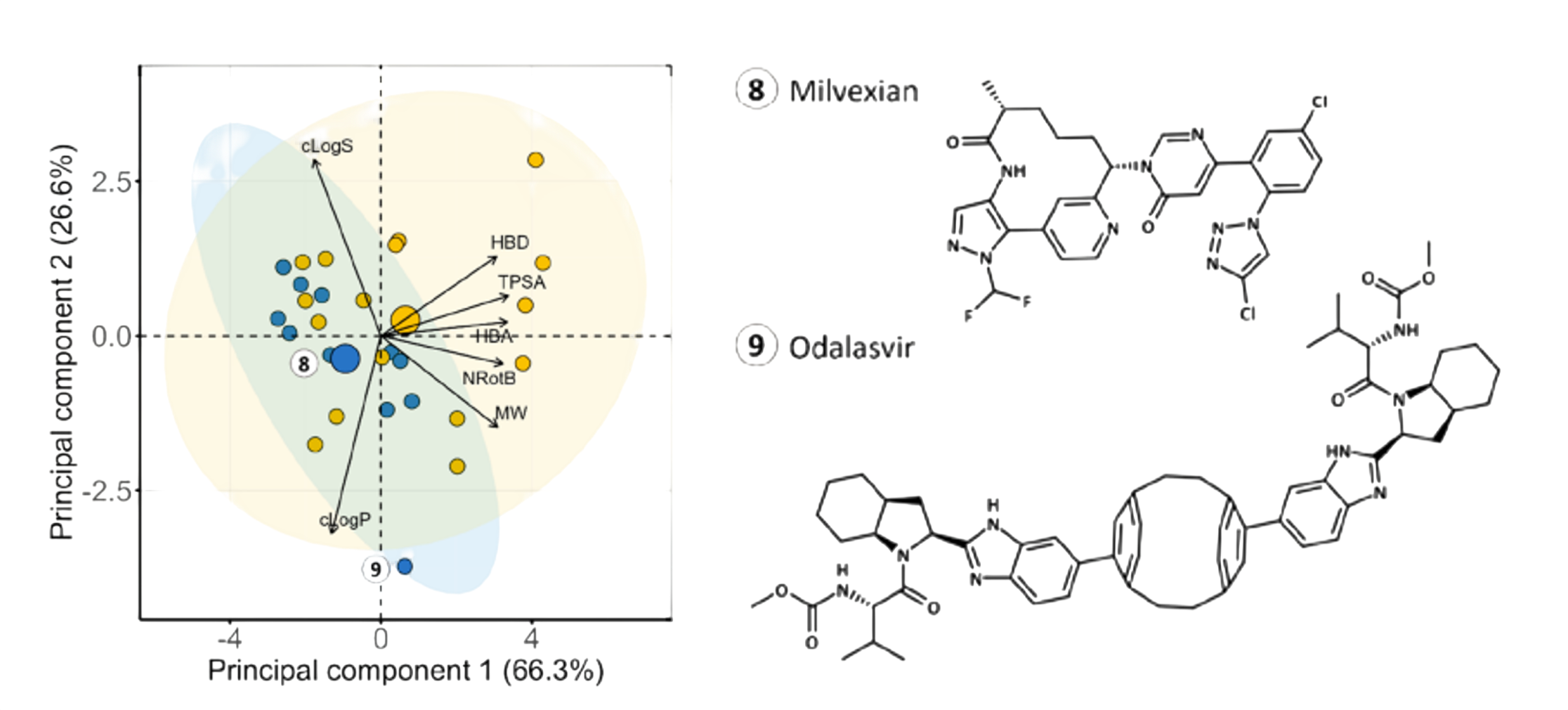
The Untapped Potential
Perhaps the most striking finding in the entire paper is when researchers compared the chemical space of approved and clinical-stage macrocycles (n = 94) to that of macrocyclic compounds in the ChEMBL database (n = 28,052), and discovered that approved and clinical drugs occupy only a tiny fraction of macrocyclic chemical space.
Let that sink in: we've explored less than 0.4% of known macrocyclic structures therapeutically. This suggests that macrocyclic drug discovery is merely in its infancy. The molecules we've approved and advanced clinically are the "easy" wins: natural products with built-in potency, or de novo designs that happened to work. But the vast majority of macrocyclic chemical space remains unexplored.
Implications for Future Design
The García Jiménez analysis reveals three key insights for macrocyclic drug discovery moving forward:
1. Natural products remain foundational: With 82% of clinical candidates still derived from natural products, it's clear that evolution remains our best teacher.
2. The bRO5 rules are guidelines, not laws: The thresholds are remarkably predictive, but not absolute.
3. Oral bioavailability requires more than rules: The "molecular chameleon" phenomenon in cyclic peptides demonstrates that macrocyclic oral bioavailability involves adaptive conformational changes we're still working to understand and exploit. Simple descriptor-based rules work for prediction, but mechanistic understanding will be crucial for rational design.
Closing Thoughts
The García Jiménez paper, by mining decades of macrocyclic drug discovery, reveals something profound: the molecules that break the rules are actually following different rules. These rules written by biology and evolution, not by chemical theory, are only now becoming visible.
As we continue to decode the principles governing macrocyclic drug discovery, we're not just expanding our therapeutic toolkit. We're fundamentally reshaping how we think about what makes a drug "good." The Rule of Five was never gospel, but just our best understanding of small molecules. Now, with macrocycles and other bRo5 modalities, we're writing a new chapter in pharmacology.
The future isn't just about following rules. It's about understanding which rules matter, when they matter, and when breaking them is exactly what patients need.
Acknowledgments
Thank you to Panyue Wang, Dongdong Wang (wangdd@dp.tech), and Jin(Tina) Yu (yujin@dp.tech) for their valuable contributions in preparing the content for this article series.

Our mission is to democratize computational drug discovery tools and empower researchers and organizations worldwide.